

 By Maylands Dental Centre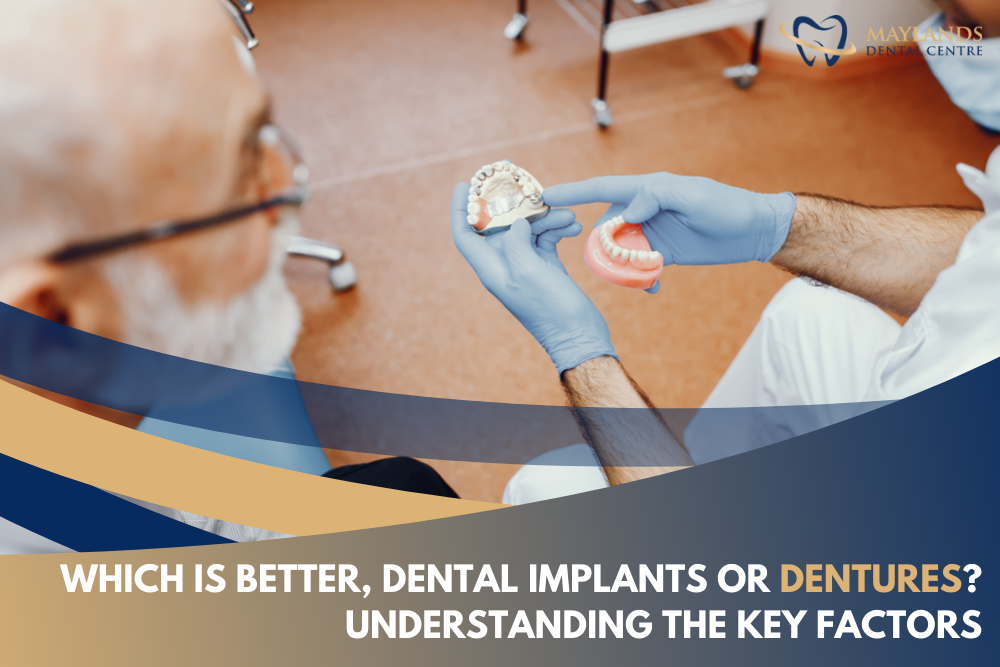
Deciding whether dental implants or dentures are right for you depends on a range of personal factors—such as your oral health, lifestyle, and budget—rather than one option being universally better. These approaches aim to restore oral function and appearance when natural teeth are missing or damaged. Each method involves different procedures, maintenance requirements, and suitability considerations that vary between individuals. Understanding how these options work can help you have more informed discussions with your dentist.
This article outlines the key differences between dental implants and dentures, including how each functions and what they’re commonly used for. We’ll explore the clinical factors that may influence which approach suits your specific circumstances, such as bone health and lifestyle considerations. Your dentist can assess your situation and discuss which option aligns with your oral health needs and goals. The information provided here is educational and not a substitute for professional dental advice tailored to your case.
Blog Navigation
- Summary of the Content:
- Understanding the Purpose of Tooth Replacement Options
- What Dental Implants Are and How They Work
- How Dentures Work and When They Are Commonly Used
- Comparing Stability and Everyday Function
- Daily Denture Care and Maintenance Considerations
- How Long Dentures May Last and Factors That Influence Longevity
- Bone Health Considerations and Long-Term Planning
- Maintenance Requirements for Dentures and Dental Implants
- Cost Considerations and Influencing Factors
- How Dentists Assess Suitability for Each Option
- Final Thoughts
Summary of the Content:
- Tooth replacement options address functional and structural concerns caused by missing teeth. They help restore chewing ability and speech clarity and prevent jawbone deterioration.
- Dental implants are surgically placed titanium fixtures that support artificial teeth. They integrate with the jawbone, offering long-term stability and function.
- Dentures are removable prosthetics that replace missing teeth and restore appearance. They can be full or partial, depending on how many teeth need replacement.
- Partial dentures use clasps or attachments to stay in place and help prevent surrounding teeth from shifting. They are designed to fit around existing natural teeth.
- Costs vary due to materials, treatment complexity, and additional procedures. A dentist will provide a personalised plan after a clinical assessment.
- A professional consultation helps determine whether your replacement option aligns with your health, goals, and lifestyle. Dentists consider all relevant medical and oral health factors before making a recommendation.
Understanding the Purpose of Tooth Replacement Options

People explore tooth replacement options when they’ve lost one or more teeth due to injury, decay, or other dental conditions. Missing teeth can affect chewing ability and speech clarity. Over time, remaining teeth may shift position. Without replacement, the jawbone may gradually lose density in the affected area. This may potentially impact facial structure. These functional and structural concerns often prompt individuals to consult their dentist about suitable restoration approaches.
Dentists assess several clinical factors before discussing tooth replacement options, including bone density, gum health, and overall oral condition. Common replacement methods include dental implants, bridges, and dentures. Each has distinct characteristics suited to different situations. The most appropriate option depends on individual anatomy, the number of missing teeth, and personal health considerations. During consultation, your dentist will explain which approaches may be suitable for your circumstances and what outcomes are achievable.
What Dental Implants Are and How They Work
Dental implants are a tooth replacement option designed to support prosthetic teeth for people with one or more missing teeth. Here’s what you should know about how they work and what the process involves:
- What dental implants are made of:
Dental implants consist of small titanium fixtures surgically placed in the jawbone to serve as artificial tooth roots, providing a foundation for replacement teeth such as crowns, bridges, or implant-supported dentures. - How the dental implant procedure works:
The dental implant process begins with a comprehensive examination. This includes scans to assess bone levels, gum health, and suitability for implant placement. Your dentist will carefully plan the treatment based on your jaw structure and oral health. This may include preparatory steps such as bone grafting. The implant is surgically placed into the jawbone. A healing phase follows, where it gradually integrates with the bone over several weeks to months. - Integration with your jawbone:
The titanium fixture is surgically placed into the jawbone, where it gradually integrates through a natural process called osseointegration. This creates a stable foundation for one or more artificial teeth and may help reduce the risk of bone loss associated with missing teeth. - Suitability varies between individuals:
Not everyone is suitable for dental implants, as several factors influence eligibility, including bone density, gum health, and the absence of active oral disease. Your overall health, lifestyle habits, and certain medical conditions will also be considered to determine whether dental implant treatment is appropriate for you. - Assessment and planning are essential:
Your dentist will conduct a comprehensive consultation to evaluate your teeth, gums, and jawbone. They will explain the surgical process, expected recovery time, and whether implants, bridges, or dentures are suitable for your dental needs.
Understanding what dental implants involve—and whether they’re right for you—starts with a professional assessment. Any surgical or invasive procedure carries risks. Before proceeding, you should seek a second opinion from a dental practitioner. If you’d like to explore your tooth replacement options, contact our clinic to arrange a consultation where we can discuss your needs and answer your questions.
How Dentures Work and When They Are Commonly Used
Dentures are a tooth replacement option designed to restore function and appearance when natural teeth are missing. Understanding how they work and when they may be suitable can help you make well-informed choices about your oral health.
Materials and Fabrication
- Acrylic resin forms the foundation:
Most dentures consist of an acrylic resin base that mimics gum tissue. Artificial teeth are made from porcelain or acrylic materials designed to match your existing teeth. - Custom fabrication:
Your dentist takes detailed impressions of your mouth and records your bite registration to create dentures that fit your gums and jaw structure accurately. - Materials affect durability and comfort:
The quality of materials used can influence how dentures feel, function, and maintain their appearance over time with proper care.
How Full Dentures Function
- Complete replacement for the upper or lower jaw:
Full dentures replace all the teeth in either the upper or lower jaw, resting directly on the gums and supporting oral structures. - Suction and fit provide stability:
Upper dentures typically achieve stability through suction against the palate. Lower dentures rely on muscle control and proper fit, and may offer less stability than upper dentures. - An adjustment period is common:
Many people wearing dentures experience an initial period as they adapt to talking, eating, and managing their dentures in daily life.
How Partial Dentures Function
Designed to fill gaps between existing teeth: Partial dentures replace one or more missing teeth while preserving remaining natural teeth, using clasps or precision attachments to maintain position.
- Metal or acrylic frameworks provide support:
Partial dentures typically incorporate a metal or acrylic framework that connects the artificial teeth and helps distribute chewing forces across adjacent teeth and gums. - Prevention of tooth movement:
By filling gaps left by missing teeth, partial dentures can help prevent remaining teeth from shifting into empty spaces over time.
The Fitting Process
- Multiple appointments:
Creating dentures involves several visits for impressions, bite registration, try-in appointments, and final adjustments to achieve optimal fit and function. - Initial adjustments address comfort concerns:
After receiving dentures, follow-up appointments allow your dentist to make necessary modifications as your mouth adapts to the new prosthetic. - Professional maintenance supports longevity:
Regular dental checkups help identify issues with fit, wear patterns, or oral health changes that may require denture adjustments or replacement over time.
Daily Function and Maintenance
- Dentures are removable for cleaning:
Unlike fixed dental bridges or implants, regular dentures can be removed for thorough cleaning with the appropriate products and techniques recommended by your dentist. - Proper care extends denture longevity:
Daily cleaning, careful handling, and proper storage when not in use help maintain denture appearance, function, and structural integrity. Your dentist can advise on expected longevity based on your specific circumstances and denture type. - Eating and speaking require adaptation:
Patients may need time to adjust their chewing technique and speech patterns, starting with softer foods and gradually progressing to a wider variety of meals.
Supporting Oral Health with Dentures
- Gum health remains important:
Even when wearing dentures, maintaining healthy gums through regular cleaning and professional assessments helps prevent infection and helps maintain proper denture support. - Regular checkups monitor changes:
Your dentist can assess how dentures fit over time, as jawbone and gum tissue naturally change shape, potentially requiring denture adjustments or replacement. - Bone loss considerations:
Unlike natural teeth, traditional dentures do not stimulate the jawbone because they rest on the gums. Dental implants are designed to integrate with the jawbone, which may help reduce the rate of bone loss that can occur after tooth loss.
Dentures are a practical tooth-replacement option for many patients who have lost teeth. Your dentist can explain how dentures compare to other options based on your specific oral health needs, lifestyle factors, and treatment goals.
Comparing Stability and Everyday Function
When considering dental implants or dentures for missing teeth, it’s important to understand how each option performs in daily life. This section provides the information you need to decide which option aligns with your oral health and lifestyle goals.
- Chewing Ability and Food Choices:
Dental implants are fixed in the jawbone, which may support chewing function. Some patients report being able to eat a wider range of foods compared to removable options, though individual experiences vary. Some clinical studies suggest that implant-supported restorations may provide enhanced stability during chewing compared to removable dentures.
Complete dentures rest on the gums and may shift during eating, particularly with harder or stickier foods. Chewing efficiency can depend on factors such as bone loss, denture fit, and individual adaptation. - Speech Clarity and Confidence:
These tooth replacement options can initially affect speech patterns, though adaptation varies among individuals. Dental implants remain fixed in position, which may reduce concerns about movement during talking. Regular dentures, particularly full dentures replacing all the teeth in the upper or lower jaw, may require an adjustment period as you learn to speak with the prosthesis in your mouth. Proper fit and regular dental checkups can help address speech-related concerns with either option. - Daily Maintenance and Care:
The care routines differ significantly between these tooth replacement options. Dental implants require oral health maintenance similar to natural teeth—regular brushing, flossing around the artificial tooth structure, and professional cleanings. Dentures are removable and must be taken out daily for cleaning, requiring specific cleaning solutions and proper care to maintain their condition. Your dentist can explain the specific maintenance requirements for each option during your consultation. - Stability Over Time:
Dental implants integrate with the jawbone through a surgical procedure, helping prevent bone loss that occurs after tooth loss. This integration is designed to provide stable, long-term support with proper care. Dentures rest on the gums and may require adjustments or replacement over time as the jawbone naturally changes shape.
The function of replacement teeth—whether implants or dentures—depends on several personal factors, such as oral health, gum condition, and bone support. Your dentist can assess these factors and advise on the most suitable tooth replacement option for your circumstances.
Daily Denture Care and Maintenance Considerations
When considering dental implants or dentures for missing teeth, it’s important to understand how each option performs in daily life. This section provides the information you need to decide which option aligns with your oral health and lifestyle goals.
- Chewing Ability and Food Choices:
Dental implants are fixed in the jawbone, which may support chewing function. Some patients report being able to eat a wider range of foods compared to removable options, though individual experiences vary. Some clinical studies suggest that implant-supported restorations may provide enhanced stability during chewing compared to removable dentures.
Complete dentures rest on the gums and may shift during eating, particularly with harder or stickier foods. Chewing efficiency can depend on factors such as bone loss, denture fit, and individual adaptation. - Speech Clarity and Confidence:
These tooth replacement options can initially affect speech patterns, though adaptation varies among individuals. Dental implants remain fixed in position, which may reduce concerns about movement during talking. Regular dentures, particularly full dentures replacing all the teeth in the upper or lower jaw, may require an adjustment period as you learn to speak with the prosthesis in your mouth. Proper fit and regular dental checkups can help address speech-related concerns with either option. - Daily Maintenance and Care:
The care routines differ significantly between these tooth replacement options. Dental implants require oral health maintenance similar to natural teeth—regular brushing, flossing around the artificial tooth structure, and professional cleanings. Dentures are removable and must be taken out daily for cleaning, requiring specific cleaning solutions and proper care to maintain their condition. Your dentist can explain the specific maintenance requirements for each option during your consultation. - Stability Over Time:
Dental implants integrate with the jawbone through a surgical procedure, helping prevent bone loss that occurs after tooth loss. This integration is designed to provide stable, long-term support with proper care. Dentures rest on the gums and may require adjustments or replacement over time as the jawbone naturally changes shape.
The function of replacement teeth—whether implants or dentures—depends on several personal factors, such as oral health, gum condition, and bone support. Your dentist can assess these factors and advise on the most suitable tooth replacement option for your circumstances.
How Long Dentures May Last and Factors That Influence Longevity
The lifespan of dentures varies depending on factors such as material quality, oral hygiene habits, and how well they fit over time. Understanding these factors helps patients better plan for future dental care and monitor changes that may affect comfort, function, or long-term oral health.
- Typical Lifespan Range:
Dentures can last for years, though this timeframe can vary depending on individual circumstances and the type of denture used. - Material Quality and Construction:
The materials used in denture fabrication and the precision of construction can influence how well dentures withstand daily use over time. - Bone and Tissue Changes:
Your jawbone and gum tissue naturally change shape over time, which can affect how dentures fit and may necessitate adjustments or replacement sooner than expected. - Usage Patterns and Care Habits:
How often you wear your dentures, the types of foods you eat, and how diligently you maintain them through proper cleaning can all impact their longevity. - Wear and Tear from Daily Function:
Regular activities such as chewing, speaking, and normal oral movements gradually wear down denture materials, particularly the tooth surfaces and base. - Professional Maintenance and Adjustments:
Regular dental visits for professional assessments and timely adjustments can help extend the functional life of your dentures and identify when replacement may be appropriate.
While dentures are designed to be durable, their lifespan varies between individuals. Your dentist can provide guidance on monitoring your dentures and determining when replacement or adjustments may be suitable for your situation.
Bone Health Considerations and Long-Term Planning
When a tooth is lost, the surrounding jawbone may gradually decrease in volume. This occurs because the bone no longer receives stimulation from chewing forces. Dental implants are designed to integrate with the jawbone, which may help maintain bone stimulation. Some patients experience less bone loss than with removable options, though outcomes vary by individual factors.
Your dentist will assess your jawbone condition during the consultation to determine suitable treatment options. This assessment may include imaging to evaluate bone volume and quality in the proposed implant area. If bone loss has already occurred, additional procedures, such as bone grafting, may be considered. Long-term success depends on proper care, regular dental visits, and factors unique to each patient’s situation.
Maintenance Requirements for Dentures and Dental Implants
Proper care is essential to maintain the function and comfort of dentures and dental implants. Long-term success relies on consistent cleaning, regular dental checkups, and good oral hygiene habits.
Denture Maintenance
- Daily cleaning routine:
Dentures should be removed daily and cleaned with a soft brush and denture cleaner to remove food particles and prevent staining. They should be soaked overnight in a denture solution to maintain their shape and hygiene. - Regular dental reviews:
Denture wearers should attend periodic dental appointments to assess the fit and condition of their dentures. Over time, changes in the jaw and gums may require adjustments or relining to maintain comfort and function. - Replacement considerations:
Dentures need replacement due to wear and changes in oral structures. Signs that replacement may be needed include looseness, cracks, or difficulty chewing.
Dental Implant Maintenance
- Daily oral hygiene:
Dental implants require brushing twice daily and flossing around the implant crown, similar to natural teeth. Special interdental brushes may be recommended to effectively clean around the implant. - Professional monitoring:
Regular dental checkups and professional cleaning are necessary to monitor the health of the surrounding gum and bone tissue. Your dentist will assess the implant’s stability and check for any signs of complications. - Component care:
While the implant post is designed to be long-lasting, the crown attached to it may need to be replaced over time due to normal wear. The timeframe varies between individuals depending on factors such as bite forces, oral hygiene, and material quality. Your dentist can discuss expected longevity during your consultation.
Both options require consistent care and ongoing professional supervision to help them function effectively. Your dentist will tailor their recommendations based on your unique oral health needs.
Cost Considerations and Influencing Factors
The cost of dental implants varies considerably depending on several factors that affect the final investment. Understanding these variables can help you prepare for a consultation where specific pricing will be discussed based on your dental needs.
- Materials and Components:
The type of implant system, abutment design, and crown material—such as porcelain or zirconia—can all influence the final treatment cost. Different manufacturers and material grades offer varying quality levels, which may affect pricing and suitability based on individual clinical needs. - Treatment Complexity:
Cases requiring bone grafting, sinus lifts, or management of multiple missing teeth involve additional procedures that extend treatment time and increase associated costs compared to straightforward single-tooth replacements. - Diagnostic and Planning Requirements:
Comprehensive treatment planning typically includes 3D imaging such as CBCT scans, diagnostic models, and multiple consultation appointments to assess bone quality and determine the optimal implant placement strategy. - Laboratory and Technical Work:
Custom-fabricated crowns, bridges, or prosthetics require skilled laboratory technicians to create restorations that match your natural teeth in appearance and function, with fees reflecting the precision and materials involved. - Practitioner Experience and Location:
Fees reflect factors such as practitioner experience, practice location, and the technology used. Treatment outcomes depend on proper case selection, clinical execution, and individual patient factors such as bone quality and oral hygiene maintenance. - Number of Implants Required:
The cost of replacing a single tooth is lower than restoring multiple missing teeth or an entire arch. Treatment plans vary depending on the number of missing teeth and the quality and volume of available jawbone.
Accurate cost information can only be provided following a thorough clinical examination and discussion of your specific treatment needs. During your consultation, your dentist will present a detailed treatment plan with transparent pricing, payment options, and a breakdown of all components involved in your care.
How Dentists Assess Suitability for Each Option
Determining the most appropriate tooth replacement option requires a comprehensive clinical evaluation tailored to each individual’s circumstances. Here’s what the assessment process involves:
- Thorough Oral Examination:
Your dentist will carefully examine your mouth, assessing the health of soft tissues and the condition of any remaining natural teeth. They will also evaluate the area where teeth are missing to detect potential concerns that may affect your personalised treatment plan. - Diagnostic Imaging:
X-rays or 3D scans may be used to assess bone density, jaw structure, and the location of nerves and sinuses. This helps determine whether there is enough bone to support treatments such as dental implants. - Medical History Review:
Your dentist will assess your general health, medical conditions, and medications to determine if any factors could impact healing or treatment outcomes. They will also consider your history of jaw surgery or radiation therapy, as these may affect the suitability of treatment and the materials selected for your care. - Gum Health Assessment:
Your gum health is evaluated to identify any signs of periodontal disease that may require treatment before tooth replacement begins. Healthy gums support the long-term success of most tooth replacement options by providing a stable foundation for the procedure. - Bone Availability and Quality:
Your dentist will first assess whether your jawbone has enough volume and density to support a dental implant or other bone-supported treatment. If not, they may recommend procedures like bone grafting to help create a more stable foundation for long-term implant success. - Discussion of Expectations and Preferences:
Your dentist will discuss your treatment goals, including function, appearance, and any concerns about comfort or aesthetics. They’ll recommend options aligned with your needs while helping you understand expected outcomes based on your oral health and available treatments. - Lifestyle and Maintenance Considerations:
Your ability to maintain good oral hygiene and to attend follow-up appointments plays an important role in the long-term success of dental treatments. Lifestyle factors, including smoking or poor dietary habits, may affect treatment outcomes and should be discussed with your dentist during the planning process.
Treatment suitability varies between individuals and cannot be determined without a professional consultation. Your dentist will explain which options are appropriate for your situation and discuss the benefits, limitations, and risks of each approach based on your specific clinical findings.
Final Thoughts
Choosing between dental implants or dentures requires careful consideration of your oral health, bone quality, budget, and lifestyle needs. Both options can effectively replace missing teeth, but they differ significantly in stability, maintenance requirements, and long-term outcomes. Your individual circumstances—including the number of missing teeth, the condition of your jawbone, and your overall health—will influence which option is most suitable. A thorough clinical examination, including diagnostic imaging, helps determine the most appropriate approach for your specific situation.
The decision about tooth replacement is personal and should be made without pressure or unnecessary urgency. Our team at Maylands Dental Centre can provide a comprehensive assessment to discuss your options in detail. We’ll explain the benefits, limitations, and realistic expectations for each treatment type, tailored to your needs. If you’d like to arrange a consultation to explore which tooth replacement option is most appropriate for your needs, contact us to schedule an appointment at your convenience.


 General Dentistry
 Cosmetic Dentistry
 Restorative Dentistry
 Dental Implants
 Orthodontics
 Sleep Dentistry
 Childrens Dentist
 Cosmetic Procedures
 Health Funds
 Government Schemes
 Payment Plan Options