

 By Maylands Dental Centre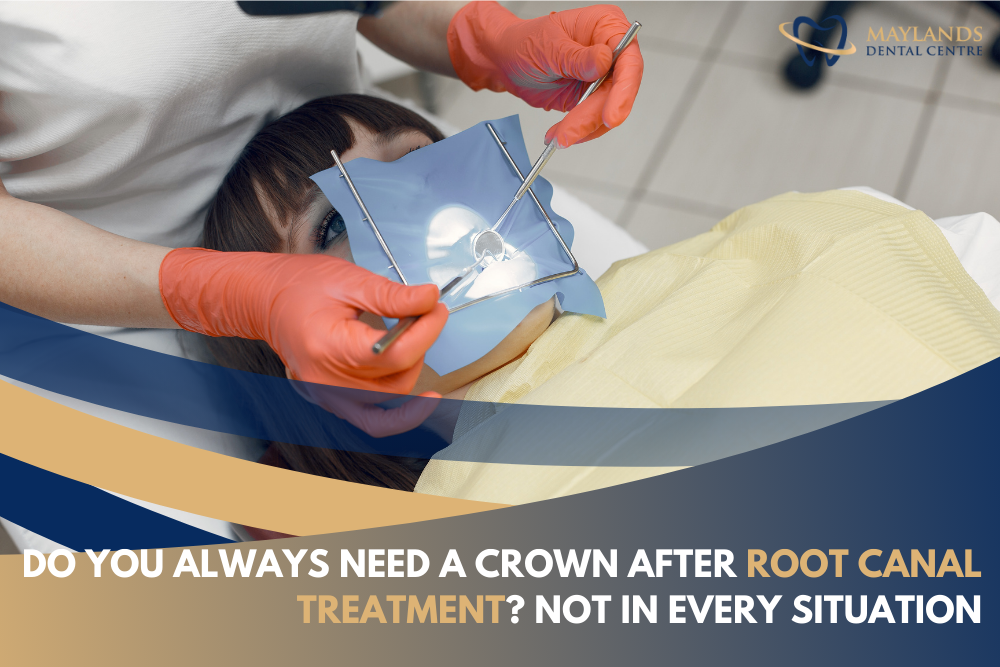
Root canal treatment is a common dental procedure that addresses infection or damage within a tooth’s pulp chamber. After the procedure, many patients wonder whether they need a crown after root canal treatment. The answer depends on several individual factors, including remaining tooth structure and the forces experienced during chewing.
This article explores structural changes that may occur after root canal therapy and the possible role of crowns in supporting tooth function and appearance. Understanding these considerations can help patients have informed discussions with their dentist about appropriate restoration options. Each case is assessed individually based on clinical findings and patient circumstances.
- Root canal treatment manages infected pulp tissue, which may influence the tooth’s structural integrity depending on how much natural tooth remains after the procedure.
- Whether you need a crown after root canal treatment depends on several factors, including the tooth’s location, remaining structure, and the functional demands placed upon it during chewing.
- Molars and teeth with large existing fillings may be more likely to receive crown recommendations. This is due to higher chewing forces and reduced natural tooth structure available for long-term support.
- Cracks or fractures, weakened tooth areas, or aesthetic concerns may influence the choice of restoration. Each situation is assessed individually by your dentist during clinical examination.
- Partial crowns, onlays, or direct composites may be appropriate in certain cases, preserving more natural tooth structure whilst providing adequate protection and function.
Why Preparation Matters Before Root Canal Therapy

Root canal treatment involves accessing the tooth’s pulp chamber and removing infected tissue. During this process, some internal tooth structure is extracted to allow thorough cleaning. This can influence how the tooth responds to chewing force over time.
Teeth that have undergone root canal therapy may benefit from structural support. Some clinical research suggests teeth with significant structure loss may be more susceptible to fracture, though individual outcomes vary considerably. Your dentist will assess your specific situation during the examination.
However, this does not mean every restored tooth will require a crown. The amount of remaining structure plays an important role in determining the appropriate restoration type. Teeth with substantial natural structure may function well with a standard filling. Those with less remaining structure may benefit from additional protection through a full crown or partial crowns.
It’s important to understand that root canal treatment itself does not automatically weaken a tooth. Rather, it is the combination of pre-existing damage and ongoing functional demands that influences long-term durability. Each tooth responds differently based on its position and the stress it experiences.
Do All Teeth Need a Dental Crown After Root Canal Treatment?
Whether you need a crown after root canal treatment depends on several clinical factors. Not all teeth require a crown following root canal therapy. Recommendations are made based on individual assessment rather than standard protocol.
The following factors are considered during individual assessment. Outcomes and recommendations vary between patients based on specific clinical findings.
| Factor | Consideration |
| Remaining tooth structure | Teeth with a more natural structure may be adequately restored with filling material or partial restorations |
| Tooth location | Back teeth experience higher bite forces than front teeth, which may influence restoration choices |
| Previous restorations | Teeth with large existing fillings have less natural structure to support function |
| Structural concerns | Visible tiny cracks or weakened areas may influence the type of restoration recommended |
| Aesthetic concerns | Some patients prefer restoration that provides a uniform appearance in visible areas. |
Dentists assess these factors during clinical examination and discuss options based on findings. Front teeth typically experience lower biting forces and may often be restored without a crown. Back teeth may be more likely to receive crown recommendations due to high chewing pressure.
The decision considers functional requirements, structural integrity, and individual circumstances. Your dentist will explain their reasoning and help you understand available options. Regular dental visits allow monitoring of restored teeth over time.
Situations Where a Crown May Be Recommended
Dentists may recommend a crown after root canal treatment in certain situations. These recommendations are based on clinical assessment and tailored to each patient’s circumstances. A crown is designed to distribute forces across the tooth surface and may provide additional support.
Previous Large Filling
Teeth with large fillings before root canal treatment have less remaining natural tooth structure. When root canal access is created, additional structural material is removed. A crown may be recommended to provide support and help distribute everyday pressure.
Large fillings replace portions of natural tooth but do not bond the same way enamel connects. The dentist recommends restoration based on how much natural structure remains after treatment. In some cases, an onlay may provide adequate support as a more conservative option.
Your dentist will assess the remaining structure and discuss whether a crown or alternative may be appropriate. The crown covers the entire visible portion of the tooth, helping protect it from further damage. Cost and material options will also be discussed during the consultation.
Presence of Cracks or Changes to the Tooth Structure
Visible cracks or fractures in a tooth may influence decisions about restoration options. Tiny cracks can potentially extend under functional stress, which dentists consider when recommending restoration type. The exposed tooth surface becomes vulnerable to bacteria and potential complications.
A crown covers the entire tooth, which may help support teeth with structural concerns. It distributes forces more evenly, acting as a shield against further damage. However, placing a crown does not prevent the chance of additional issues.
If your dentist identifies cracks during examination, they will discuss implications and available options. In some cases, monitoring may be appropriate through multiple visits. In others, a protective restoration may be commonly recommended as part of the care approach.
Molars Exposed to Higher Bite Forces
Molars are positioned at the back of the mouth and help grind food. These teeth experience considerably higher forces during normal function compared to other teeth. Molars typically experience considerably higher chewing forces than front teeth due to their position and function. Your dentist considers these functional demands when discussing restoration options.
Due to these higher functional demands, molars may be more likely to receive crown recommendations. This is particularly true if a significant structure was extracted or if large previous restorations are present. The crown restores strength and helps the tooth handle daily use.
However, not all molars require crowns after root canal therapy. If adequate structure remains and there are no significant concerns, alternative approaches may be suitable. Your dentist will evaluate your individual situation and discuss options.
Aesthetic Considerations in Visible Areas
Some patients prefer restorations that maintain a uniform appearance in the visible areas of the smile. Ceramic crowns or porcelain options can be crafted to match natural tooth colour. This may be one consideration when restoring front teeth.
However, aesthetic preferences are just one factor dentists consider when recommending restoration type. Modern composite resin materials also provide a natural look and may be appropriate for teeth with adequate structure. The choice depends on multiple factors, including functional requirements.
Your dentist will discuss aesthetic considerations alongside structural factors during consultation. They can show examples of different restoration types and help you understand what may enhance your smile. The dentist designs a restoration to fit your individual circumstances.
When a Crown May Not Be Necessary
There are situations where you may not need a crown after root canal treatment, and other restorative options may be appropriate. The decision depends on the remaining structure, tooth position, and functional requirements. Alternative restorations may provide adequate protection without covering the entire tooth.
Front Teeth with Minimal Structural Loss
Front teeth, including incisors and canines with minimal damage, may often be restored with direct composite fillings. These teeth typically experience lower biting forces compared to back teeth. If root canal access is conservative, a crown may not be needed.
Composite materials bond well to tooth structure and provide both functional and aesthetic results. The filling material can be shaped to restore the natural appearance. Regular dental visits allow monitoring of the restoration over time.
Teeth with Moderate Structure Loss
Teeth with moderate structure loss may be candidates for partial restorations, such as onlays or inlays. These restorations cover only damaged portions whilst preserving more natural structure. They are custom-made in a dental lab and bonded to the tooth.
Onlays provide support where needed without covering the entire surface. They can help prevent fractures whilst maintaining more of the original tooth. The process typically requires multiple visits for preparation and placement.
Premolars with Adequate Structure
Premolars with adequate remaining structure may be restored with composite or ceramic partial restorations. These teeth experience moderate chewing forces. If structural integrity is maintained, full crown cover may not be essential.
Your dentist will assess your tooth after treatment and recommend restoration based on findings. They will explain the reasoning behind their recommendation and discuss alternatives. Understanding the difference between options helps you make informed choices about your dental care.
When to Consider Alternatives
Alternative restorations may be appropriate when:
- Adequate natural tooth structure remains after the procedure, providing sufficient support for a filling or partial restoration.
- The tooth is not subjected to high chewing pressure due to its position or functional role in the mouth.
- No significant cracks or fractures are present that could compromise the tooth’s structural integrity over time.
- The tooth is located in an area with lower functional demands, such as the front teeth, which experience less biting force.
- The patient prefers a more conservative approach where suitable, preserving more natural tooth structure whilst still providing adequate protection.
Each situation is assessed individually during examination. Your dentist will discuss the benefits and limitations of different approaches. They will help you understand what may be appropriate for your oral health needs.
Understanding the Crown Process
If a crown is recommended, understanding what to expect can help reduce concerns. The dental crown procedure typically involves two appointments. During the first visit, the dentist prepares the tooth by reshaping it.
An impression is taken to create a custom crown that fits precisely. A temporary crown protects the tooth whilst the restoration is made. The dental lab crafts the crown according to the provided specifications.
At the second appointment, the temporary crown is removed, and the definitive crown is fitted. The dentist checks proper bite alignment and appearance before final bonding. The entire process usually takes a few weeks from start to finish.
Crown materials include the following:
- Ceramic or porcelain for a natural appearance
- Metal alloys such as gold, for durability
- Combination materials for strength and aesthetics
Your dentist will recommend material based on tooth location, functional demands, and aesthetic preferences. Cost varies depending on material choice and complexity. Some health fund policies may provide partial cover for crowns. Cover varies considerably between policies—check with your provider for specific details.
Maintaining Your Restoration
Whether you receive a crown or an alternative restoration, proper maintenance supports long-term function. Good oral health practices may help reduce the risk of decay and infection in restored teeth. Regular care can support long-term tooth health, though individual outcomes vary.
To maintain your restoration:
- Daily Brushing:
Brush your teeth twice daily with fluoride toothpaste to manage plaque buildup and prevent bacteria from affecting your restoration. - Floss Regularly:
Floss daily around the restoration and surrounding teeth to remove food particles and maintain healthy gums between appointments. - Avoid Grinding:
Avoid grinding or clenching your teeth, as these habits can wear or break the restoration over time. - Protect Teeth:
Don’t chew ice or use your teeth as tools, as this can damage the restoration and compromise its longevity. - Schedule Checkups:
Attend regular dental visits for monitoring and professional cleaning so your restoration can be checked and maintained over time.
Pain or sensitivity after restoration placement may happen initially, but should improve. If symptoms persist or worsen, contact your dentist for evaluation. Early attention can prevent minor issues from becoming major complications.
Restored teeth may function well with proper care, though longevity varies considerably between individuals. Your dentist will monitor the restoration during regular check-ups.
Final Thoughts
Crowns may be recommended in certain cases for structural or aesthetic reasons. Other situations may be suited to alternative restorations such as composite fillings or partial crowns. The appropriate approach depends on individual assessment and clinical findings.
Not every tooth requires a crown following root canal therapy. The decision considers the remaining structure, tooth location, functional demands, and any pre-existing concerns. Understanding these factors helps patients have productive conversations with their dental team.
If you would like personalised guidance about restoration options following root canal treatment, contact Maylands Dental Centre. The team can assess your tooth and explain options that may be suitable. Book a consultation to discuss your individual circumstances and dental care needs.


 General Dentistry
 Cosmetic Dentistry
 Restorative Dentistry
 Dental Implants
 Orthodontics
 Sleep Dentistry
 Childrens Dentist
 Cosmetic Procedures
 Health Funds
 Government Schemes
 Payment Plan Options