

 By Maylands Dental Centre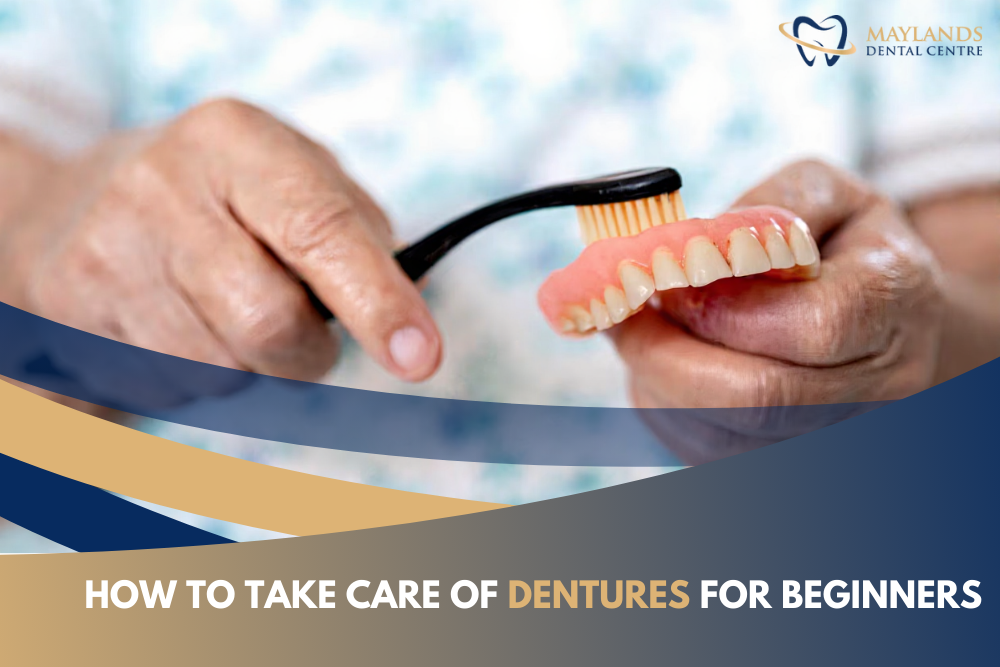
Adjusting to dentures can feel overwhelming for many people. New denture wearers often worry about cleaning procedures, storage requirements, and daily maintenance routines. The learning curve exists, but these care routines become second nature with repetition.
Dentures accumulate plaque, food particles, and bacteria throughout the day. Without proper cleaning and overnight soaking, denture materials can deteriorate prematurely. Bacterial buildup may lead to oral infections, bad breath, and gum irritation.
This guide covers fundamental denture care basics that support both appliance longevity and oral health. You will learn about proper cleaning techniques, overnight soaking methods, and common mistakes to avoid. Each section provides clear, evidence-based guidance.
Understanding how to take care of dentures for beginners helps you follow these recommendations. They can help preserve your dentures and support oral tissue health for years to come.
Blog Navigation
- Summary of the Content:
- Understanding Your Dentures
- Daily Denture Cleaning Routine
- Soaking Your Dentures Overnight
- What Not to Do with Your Dentures
- Handling New Dentures: The First Few Weeks
- Signs Your Dentures Need Professional Attention
- Maintaining Oral Health with Dentures
- Long-Term Denture Maintenance Schedule
- Final Thoughts
Summary of the Content:
- Learning how to take care of dentures for beginners starts with twice-daily cleaning using soft-bristle brushes and denture-specific cleaning products.
- Overnight soaking in appropriate liquids keeps dentures moist, prevents warping, and provides deep cleaning.
- Standard toothpaste and hot water can damage dentures and should be avoided.
- New denture wearers commonly experience increased saliva, mild soreness, and eating difficulties during the initial adjustment period.
- Professional dental check-ups every 6 to 12 months allow for necessary adjustments and oral health monitoring.
- Dentures may require relining every one to three years as the jawbone structure changes over time.
- Caring for dentures also means caring for oral tissues, including gums and tongue, even with complete dentures.
Understanding Your Dentures

Dentures are dental appliances that replace missing teeth. Most dentures consist of acrylic resin bases that hold porcelain or acrylic teeth. The materials are selected for durability, appearance, and biocompatibility with oral tissues.
Proper care matters for both longevity and oral health. Denture materials are porous, which means they can harbour bacteria if not cleaned thoroughly. Bacterial accumulation may lead to oral infections, bad breath, and gum irritation. Staining can occur from foods, beverages, and tobacco use.
Without regular maintenance, dentures can deteriorate prematurely. This deterioration may result in costly replacements and compromised fit. Taking care of dentures protects your investment and supports your oral health. Understanding these fundamentals helps you recognise why each care step matters.
Daily Denture Cleaning Routine
A consistent denture cleaning routine forms the foundation of proper denture care for new wearers. Dentures accumulate plaque, food particles, and bacteria throughout the day. These deposits require cleaning to prevent oral health problems and maintain appliance hygiene.
Cleaning your dentures twice daily is recommended. This frequency helps control bacterial growth and prevents staining. The habits may feel time-consuming initially. However, most patients report that these routines become automatic within a few weeks.
Morning Cleaning Steps
Begin your morning denture cleaning routine by taking out your dentures from their overnight soaking container. Rinse them thoroughly under running water to rinse away the soaking liquid and any loosened debris.
The cleaning process includes several steps:
- Place a folded towel in the sink basin. This cushions the dentures if they slip from your hands during cleaning.
- Apply denture toothpaste or a denture-specific cleaner to a soft-bristle denture brush. Standard toothpaste designed for natural teeth is too abrasive for denture materials.
- Brush all denture surfaces gently but thoroughly. This includes the teeth, gum-coloured base, and inner surfaces that contact your gums.
- Rinse the dentures completely under running water. Check that all cleaning product residue is rinsed away before inserting them.
- Inspect your dentures for any visible damage, cracks, or rough spots that may require professional attention.
This morning routine commonly takes three to five minutes once you become familiar with the process. The inspection step helps identify problems early, when they may be easier to address.
Evening Cleaning Steps
Evening denture cleaning is similar to morning care but includes additional oral hygiene steps. Take out your dentures and rinse them under running water to eliminate loose food particles and debris.
Follow these evening cleaning steps:
- Brush all denture surfaces thoroughly with denture cleaner and a soft denture brush.
- Rinse the dentures completely to clear away all cleaning product residue.
- Place the clean dentures in an appropriate soaking liquid for overnight storage.
- Clean your mouth, gums, and tongue with a soft toothbrush. This clears away bacteria and stimulates circulation in your oral tissues.
The evening routine provides an opportunity to give your oral tissues extended rest from wearing dentures. Many dental professionals recommend taking out dentures for at least six to eight hours daily when possible. This rest period allows gum tissue to recover and helps prevent irritation.
Soaking Your Dentures Overnight
Denture soaking overnight serves multiple purposes for appliance maintenance. Keeping dentures moist prevents the acrylic material from drying out and warping. Overnight soaking also provides deep cleaning that brushing alone cannot achieve.
Nightly soaking is generally recommended for most denture types. The moisture prevents dimensional changes that can affect denture fit. Additionally, denture soaking overnight gives your oral tissues essential rest from constant denture contact.
Your dentist can provide guidance on the appropriate soaking routine for your specific denture type. Some partial dentures with metal components may require different soaking liquids than full acrylic dentures. Always follow professional recommendations for your particular appliance.
Choosing the Right Soaking Solution
Several types of denture soaking liquids are available. Each option offers different benefits for cleaning and maintaining your appliance. Understanding these options helps you select the most appropriate product.
Main soaking liquid types include:
- Effervescent tablets dissolve in water to create a cleaning liquid. These tablets contain ingredients that help clear away stains and kill bacteria.
- Alkaline peroxide liquids provide antibacterial cleaning and can help clear away tough stains. These are available as liquid concentrates or ready-to-use formulas.
- Plain water can be used when other options are unavailable. However, water lacks the antibacterial properties of commercial products.
- Commercial denture cleaning products are recommended for their antibacterial properties and stain elimination capabilities. These products are formulated specifically for denture materials.
When selecting a product, check that it is suitable for your denture type. Your dentist can recommend specific brands based on your needs.
Proper Soaking Techniques
Using the appropriate soaking technique maximises cleaning effectiveness and denture protection. Following the manufacturer’s instructions helps the product work as intended. These guidelines help you establish an effective denture soaking overnight routine.
Steps for proper overnight soaking:
- Use a clean, dedicated container for soaking. The container should be large enough to submerge your dentures fully.
- Follow product instructions for liquid strength and soaking duration. Using too little or too much product may reduce effectiveness.
- Confirm dentures are completely submerged in the liquid. Partial submersion may leave some areas uncleaned.
- Place the soaking container in a location where it will not be knocked over or disturbed.
- Rinse dentures thoroughly before inserting them in the morning. This clears away any remaining liquid that may irritate oral tissues.
Common mistakes to avoid include reusing soaking liquids and using water that is too hot. Fresh liquid should be prepared for each soaking session.
Hot or boiling water can warp acrylic denture material, potentially affecting fit. Room-temperature or lukewarm water is appropriate for most denture-soaking liquids.
What Not to Do with Your Dentures
Understanding what to avoid helps with denture damage prevention. Certain common actions can harm denture materials or affect their fit. This information can help you protect your investment and maintain appliance integrity.
Key actions to avoid:
- Never use standard toothpaste on your dentures. Unlike denture toothpaste, it contains abrasives that can scratch their surfaces. These scratches create rough areas where bacteria and stains accumulate. Use products specifically formulated for dentures instead.
- Avoid hot or boiling water when cleaning or soaking dentures. High temperatures can cause acrylic material to warp. This warping may alter the denture’s shape and affect its fit. Always use room temperature or lukewarm water.
- Do not use bleach-containing household cleaners unless they are specifically designed for dentures. Bleach can damage denture materials and discolour them. Check product labels to verify they are denture-appropriate.
- Never attempt to bend or adjust dentures yourself. This can result in breakage or distortion. Professional adjustments provide a proper fit without damaging the appliance.
- Avoid abrasive cleaning tools such as stiff-bristled brushes or scouring pads. These can scratch and damage denture surfaces. Soft-bristled denture brushes are designed to clean without causing damage.
Each of these prohibited actions can compromise denture integrity or lifespan. Using appropriate products and techniques supports long-term denture maintenance.
Denture damage prevention starts with understanding these key guidelines. When uncertain about a cleaning product or method, consult your dental professional before use.
Handling New Dentures: The First Few Weeks
The initial adjustment period presents unique challenges for new denture care. Many patients experience discomfort, eating difficulties, and increased saliva production. These experiences are commonly reported by new denture wearers. They are often temporary in nature.
Many patients find these challenges diminish in the first few weeks. The adjustment period varies depending on individual factors. Some patients adapt within days, while others may need several weeks. Your oral tissues require time to adapt to denture contact.
Following proper care routines from day one establishes good long-term habits. New denture care includes the same cleaning and soaking methods described earlier. Starting these routines immediately helps you develop muscle memory and consistency.
Initial Adjustment Period Expectations
Many new denture wearers worry that their experiences indicate a problem. Most initial symptoms improve as you adapt to wearing dentures.
Common experiences include:
- Increased saliva production often occurs during the first few days. Your mouth may interpret dentures as food and produce extra saliva. This commonly normalises within a week.
- Mild soreness where dentures contact gums is commonly reported. This soreness may occur as tissues adjust to pressure from the dentures.
- Difficulty with pronunciation can occur initially. Certain sounds may require repetition as you learn to speak with dentures in place.
- Challenges with eating are normal at first. Chewing feels different with dentures. Learning to eat comfortably takes time.
Individual experiences vary with these symptoms. Many patients find improvement within the first few weeks of consistent wear. However, severe pain or an inability to wear dentures may indicate a fit issue. These problems require professional adjustment rather than just time.
Common First-Week Challenges
Specific first-week challenges can be managed with practical strategies. These approaches help you function more comfortably while your adjustment progresses.
Tips for common challenges:
- For excessive saliva, swallowing more frequently can help reduce it. Excess saliva production often diminishes within several days.
- For eating difficulties, start with soft foods that require minimal chewing. Gradually introduce firmer foods as you become more comfortable.
- For speech changes, read aloud regularly at home. This helps train your mouth to form sounds with dentures in place.
- For minor sore spots, give oral tissues short breaks. Taking out dentures for a few hours can provide relief. However, persistent soreness requires professional evaluation.
Attending follow-up appointments is important during this period. Dentists expect to make minor adjustments as you adapt to new dentures. These adjustments can address fit issues that cause discomfort or difficulty. Do not hesitate to contact your dental clinic if problems arise between scheduled appointments.
Signs Your Dentures Need Professional Attention
Even with good home care, dentures may require professional attention for adjustments or replacement. This represents normal maintenance rather than failure. Regular dental check-ups are important for denture wearers. Visits are generally recommended every 6 to 12 months.
Warning signs requiring prompt professional attention include:
- Visible cracks, chips, or breaks in the denture material require professional assessment. These damage types can worsen and may affect denture function.
- Persistent looseness or movement during normal activities indicates fit changes. Dentures may become loose as the jawbone shape changes over time.
- Persistent sore spots or irritation that does not improve with short breaks may indicate areas needing adjustment.
- Difficulty keeping dentures in place during eating or speaking suggests the need for professional evaluation.
- Changes in bite alignment or jaw positioning may develop gradually and require professional assessment.
- Discolouration that does not respond to normal cleaning may indicate staining that requires professional attention.
Addressing these issues promptly can prevent more serious problems. Delaying professional care may result in increased discomfort or more extensive restorations. Your dental team can assess whether adjustment, relining, or replacement is needed.
Maintaining Oral Health with Dentures
Denture care represents only part of oral health maintenance. Caring for dentures also means caring for your gums, tongue, and other oral tissues. Some people mistakenly believe that losing all natural teeth means no longer needing dental care. However, oral health extends beyond teeth.
Specific guidance for oral tissue care includes:
- Gently brush gums and tongue each evening before inserting dentures. This clears away bacteria and stimulates blood circulation in oral tissues.
- Rinse your mouth after meals when possible. This helps clear away food particles and reduces bacterial accumulation.
- Give gums rest periods by taking out dentures for at least six to eight hours daily, such as overnight if circumstances allow. This rest supports tissue health.
- Massage gums gently with clean fingers or a soft cloth. This can help maintain healthy circulation.
- Warning signs of oral health problems include persistent redness and white patches. Sores that do not heal within two weeks or unusual lumps also warrant attention. These symptoms require professional evaluation.
Regular dental check-ups allow for professional cleaning and oral cancer screening. They also assess how oral tissues are adapting to denture wear.
Long-Term Denture Maintenance Schedule
Dentures require consistent maintenance and eventual replacement, not just daily cleaning. A denture maintenance schedule helps you understand what to expect over time. Denture lifespan varies depending on individual factors. These include changes in oral structure, wear patterns, and maintenance methods.
Many patients find their dentures last 5 to 10 years with proper care. However, some may require earlier replacement. Relining frequency varies, but it is typically required every 1 to 3 years. Natural jawbone resorption occurs over time, which can affect denture fit.
A general long-term denture maintenance schedule includes:
- Immediate follow-ups during the first month allow for minor adjustments as you adapt to new dentures.
- Routine check-ups every 6 to 12 months support ongoing assessment of oral health and denture condition.
- Relining may be needed every one to three years, as the jawbone naturally resorbs over time.
- Eventual replacement typically occurs after 5 to 10 years, though this timeline varies by individual circumstances.
Some private health fund plans may cover a portion of denture maintenance or replacement costs. Check your specific plan details for benefit information.
Maintaining regular check-ups allows dentists to proactively identify needed maintenance. This approach can prevent emergencies and help manage costs over time.
Final Thoughts
Proper denture care requires consistent daily routines of thorough cleaning and overnight soaking. Avoiding damaging products and harmful actions protects your investment. Maintaining regular professional check-ups supports your dentures continuing to function well. Your oral health remains supported through these combined efforts.
How to take care of dentures for beginners may seem complex initially. However, many patients find that these actions become routine with consistent effort. The time needed to establish comfortable routines varies among individuals. Starting with appropriate cleaning products and establishing your twice-daily denture cleaning routine sets you up for success.
Questions should be directed to your dentist for professional guidance. They can provide personalised recommendations based on your specific denture type and oral health needs.
Maylands Dental Centre welcomes questions from denture patients and can provide support throughout your denture journey. Proper care maintains your appliance and supports your oral health for years to come.
Important Information
A consultation is required to assess your individual needs and suitability for dentures. Individual circumstances vary, and adjustment timelines may differ between patients.
This information is provided by Maylands Dental Centre, 78 Eighth Avenue, Maylands, WA 6051. Principal Dentists: Dr Justin Soon, Dentist – General Registration, AHPRA Registration Number: DEN0001784699, and Dr Jonathan Lo, Dentist – General Registration, AHPRA Registration Number: DEN0001995824. For appointments or enquiries, contact us on (08) 9370 5464.



 General Dentistry
 Cosmetic Dentistry
 Restorative Dentistry
 Dental Implants
 Orthodontics
 Sleep Dentistry
 Childrens Dentist
 Cosmetic Procedures
 Health Funds
 Government Schemes
 Payment Plan Options