

 By Maylands Dental Centre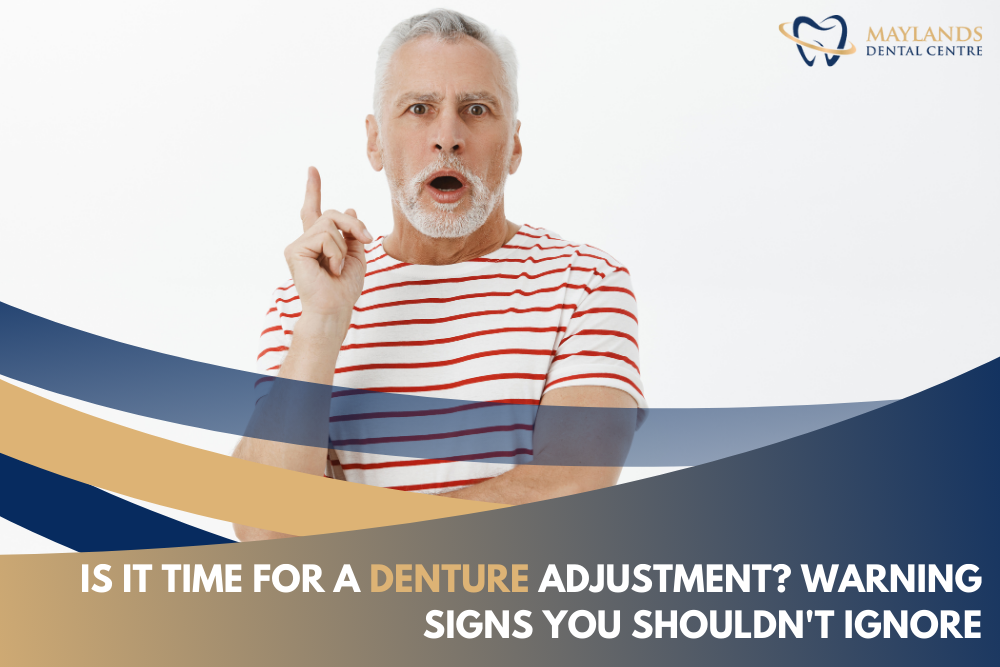
Many patients report difficulty eating with dentures during the first few weeks after fitting. This change in fit is a normal part of wearing dentures, as your mouth’s shape naturally evolves. Your jawbone and gum tissues may change after tooth loss, which can affect how dentures sit in your mouth. Understanding when your dentures need professional attention can help maintain your comfort and quality of life.
Dentures themselves don’t change, but the bone and soft tissues supporting them continue to remodel over months and years. This natural process can create gaps between your dentures and gums, leading to movement, discomfort, or difficulty speaking. A denture adjustment may help restore a more comfortable fit and improve function for many patients. In this article, you’ll learn to recognise the key signs that indicate it may be time to schedule an evaluation with your dentist.
Blog Navigation
- Summary of the Content:
- Why Do Dentures Need Adjustment Over Time?
- Signs that Indicate Your Dentures May Need Adjustment
- What to Expect During a Denture Adjustment Appointment
- Understanding Different Types of Denture Adjustments
- When Should Dentures Be Replaced Rather Than Adjusted?
- How to Care for Your Dentures and Maintain Proper Fit
- Final Thoughts
Summary of the Content:
- Dentures may require adjustments as your mouth shape changes over time. Regular dental checkups identify fit issues and support comfort and function.
- Bone resorption occurs naturally after tooth loss, causing the jawbone to shrink gradually. This can affect how dentures sit against the gums and bone.
- Gum tissues and ridges may change in shape and density over months and years. These changes can influence denture stability and comfort.
- Dentures retain their original size, even as oral tissues evolve. This can create gaps or pressure points requiring professional attention.
- Signs of poor fit include loose dentures, sore spots, or difficulty chewing. Changes in speech, facial appearance, or visible wear may also indicate the need for adjustment.
- Denture refinements include minor in-chair refinements or soft- and hard-lining. Replacement may be needed when wear or bone changes prevent a secure fit.
- Proper denture care involves daily cleaning, overnight soaking, and dental checkups. Avoid self-adjustments, as these can compromise fit and function.
Why Do Dentures Need Adjustment Over Time?

Even well-fitted dentures may require refinement over time as your mouth naturally changes. Regular clinical reviews help identify early changes in fit and determine when denture adjustment may be required to support comfort, function, and oral health.
- Bone Resorption After Tooth Loss:
After teeth are removed, the jawbone gradually resorbs or shrinks because it no longer receives stimulation from tooth roots. This process occurs naturally and varies significantly between individuals, affecting how dentures fit against the underlying bone structure. - Gum Tissue Changes:
The soft tissues in your mouth, including gums and the ridge where dentures rest, can change shape and density over months and years. These tissue changes may alter how your dentures fit and affect overall comfort. - Dentures Remain the Same Size:
While your mouth’s shape changes, your dentures maintain their original dimensions. This mismatch between evolving oral structures and fixed denture shapes often creates gaps or pressure points that require professional attention. - Immediate vs. Established Dentures:
Dentures fitted immediately after tooth extraction require more frequent adjustments during the first six months as your mouth heals and tissues settle. Established dentures worn for extended periods may require periodic adjustments due to natural age-related changes. - Typical Adjustment Timeline:
Most denture wearers may need professional adjustments every one to two years, though individual needs vary considerably. Some people require more frequent visits, while others maintain a comfortable fit for longer periods, depending on their unique oral changes. - Normal Part of Denture Ownership:
Requiring adjustments does not indicate poor initial fabrication or fitting of your dentures. Regular maintenance is essential for dentures, as other dental appliances require periodic professional attention to maintain optimal function and comfort.
These natural changes are expected, and regular dental examinations can help identify when adjustments may be beneficial for your comfort and denture function. Properly aligned dentures reduce the risk of pain associated with ill-fitting dentures.
Signs that Indicate Your Dentures May Need Adjustment
Dentures are designed to fit comfortably and function smoothly, but subtle changes in your mouth over time can affect how they feel and perform. Paying attention to early warning signs can help you address minor issues before they lead to ongoing denture discomfort or functional limitations. The sections below outline key changes you may notice when your dentures no longer fit as they once did and may benefit from professional review.
Your Dentures Feel Loose or Unstable
One of the most common signs that your dentures may need professional adjustment is noticing increased movement during daily activities. You might experience shifting while eating, speaking, or even at rest, which differs from the minimal movement expected with well-fitted dentures. If you find yourself reaching for denture adhesive more frequently than usual, this often indicates that the fit has changed over time.
Loose dentures develop gradually as the underlying bone and gum tissues naturally change shape following tooth loss. Upper dentures generally maintain stability through suction against the palate, while lower dentures are more prone to movement due to tongue action. Clicking sounds, slipping sensations, or dentures that lift when biting into food may suggest it’s time to consult your dentist.
Discomfort, Sore Spots, or Gum Irritation
Poor fit or sore spots may cause difficulty eating with dentures. An oral prosthetic that no longer fits properly may create pressure points where the denture base rubs against your gum tissue. This rubbing can cause persistent sore spots, redness, or inflammation that don’t subside within normal healing time. While some initial tenderness is expected when you first receive dentures, new discomfort in previously comfortable dentures often indicates a fit change.
Sharp or rough denture edges can irritate the soft tissues of your mouth, particularly along the gum line and cheek areas. You may notice bleeding when cleaning your dentures or see red, inflamed areas on your gums at the denture contact points. If you’re experiencing ongoing oral discomfort, a professional assessment can identify whether adjustment or denture relining may help restore your comfort.
Difficulty Chewing or Eating Certan Foods
When dentures no longer fit properly, they may shift or tilt during chewing. This movement can create uneven pressure on the gums, making it difficult to eat foods that were once manageable. Food particles may also become trapped beneath loose dentures, causing further discomfort during meals.
Difficulty eating with dentures may affect nutrition when fit issues persist. Many denture wearers avoid certain nutritious foods due to discomfort or instability. If you notice these changes, a professional denture adjustment may help restore more comfortable function.
Speech Changes or Pronunciation Difficulties
Poorly fitting dentures may cause clicking sounds, whistling, or slurred speech during conversation. When dentures shift position in your mouth, they can interfere with the tongue placement needed for clear pronunciation. You might notice particular difficulty forming sounds like S, F, and T, which require precise contact between your tongue and dentures.
These speech issues differ from the initial adjustment period when dentures are new, and your mouth is still adapting. Ill-fitting dentures can also trigger excess saliva production, which further affects your ability to speak clearly and comfortably. Stable dentures that fit properly help maintain the tongue and lip positioning necessary for natural speech patterns.
Changes in Facial Appearance
Ill-fitting dentures may contribute to a sunken appearance around the mouth and cheeks over time. This can occur when worn dentures lose their vertical dimension, affecting the natural support structure of the lower face. These changes typically develop gradually, and individual experiences with denture wear can vary significantly.
Poorly fitted dentures may also reduce lip fullness, potentially leading to more pronounced lines around the mouth. Well-fitted dentures are designed to help maintain facial contours by providing proper stability to the surrounding soft tissues. If you notice facial changes, a professional assessment can determine whether a denture adjustment or replacement is appropriate.
Dentures Are Visibly Worn, Cracked, or Damaged
Visible damage to your dentures may indicate the need for professional assessment and potential adjustment or replacement. Cracks, chips, or fractures in the denture base can compromise structural integrity and affect fit. Worn artificial teeth with flattened chewing surfaces may reduce your ability to process food effectively and comfortably.
Staining that resists standard cleaning methods or broken clasps on partial dentures may indicate that your dentures require professional attention. These signs often signal that simple adjustments may no longer be sufficient to restore proper function and comfort. Your dentist can evaluate the extent of wear or damage and recommend whether denture relining or replacement is appropriate.
What to Expect During a Denture Adjustment Appointment
An adjustment appointment involves a thorough assessment of your dentures and surrounding oral tissues. This assessment helps identify areas that may require modification to improve comfort or function.
- Initial Examination and Assessment:
Your dentist will examine your dentures and oral tissues to identify pressure points, assess the current fit, and determine the most appropriate adjustment approach for your dental needs. - Pressure Spot Identification:
Marking materials may be used to highlight areas where your dentures are creating excessive pressure or causing discomfort against your gums. - Minor In-Chair Adjustments:
Small modifications, such as selective grinding and polishing, can often be completed during your appointment to relieve pressure points and smooth rough edges. - Denture Relining Procedures:
Depending on your situation, your dentist may recommend a soft reline for temporary cushioning or a hard reline for a more durable improvement in the denture’s fit. - Rebasing Considerations:
If significant bone changes have occurred, rebasing may be considered an alternative to a simple adjustment, though this requires laboratory work. - Same-Day vs. Laboratory Work:
Some adjustments can be completed immediately, while others may require sending your dentures to a dental laboratory for more extensive modifications. - Follow-Up Appointments:
Additional visits may be required to fine-tune the fit and support optimal comfort, as achieving a well-fitting result often involves multiple adjustments.
Your dentist will assess your specific situation and recommend the most suitable approach based on your oral health and denture condition.
Understanding Different Types of Denture Adjustments
Denture fit can change over time, and several adjustment approaches address comfort, stability, and oral function as your mouth adapts. The sections below outline quick in-chair refinements, cushioning options, and longer-term refitting methods used to accommodate tissue changes and bite requirements.
Minor Adjustments
Minor adjustments involve selectively grinding the denture base to remove pressure points that cause discomfort. Your dentist may smooth rough edges that irritate your gums or soft tissues. The alignment of denture teeth can also be modified to improve your bite function. These adjustments are typically completed during a single appointment at the dental clinic.
Soft Denture Relines
Soft denture relines involve adding a pliable cushioning layer to the denture’s tissue-contacting surface, which may help improve comfort. Your dentist may recommend this option if you have sensitive gums or healing tissues, or if you experience denture discomfort with traditional hard acrylic. Soft reline materials usually last between one and two years before requiring replacement or conversion to a hard reline. This approach can provide transitional comfort while your oral tissues adjust or heal, though individual results may vary.
Hard Denture Relines
Hard denture relines involve applying a new layer of durable acrylic material to the denture’s tissue-facing surface. This type of reline provides a longer-lasting option than soft relines, often maintaining proper fit for three to five years. Your dentist may recommend a hard reline when your oral tissues have stabilised, and significant bone changes have occurred. The procedure can be completed chairside during your appointment or sent to a dental laboratory, depending on your specific needs and circumstances.
When Should Dentures Be Replaced Rather Than Adjusted?
Dentures typically last 5 to 10 years with proper care and regular professional maintenance. Over time, extensive wear patterns may develop on the artificial teeth, affecting chewing efficiency and overall function. Multiple cracks or fractures in the denture base often indicate that the material has weakened to the point where effective restoration is no longer possible. Your dentist can assess whether the structural integrity of your dentures allows for adjustment or requires complete replacement.
Significant bone loss in the jaw may progress to a point where relining cannot provide adequate stability. In these cases, replacement dentures designed for your current oral anatomy may be recommended by your dental professional. Implant-supported dentures may be an option, depending on your clinical situation and bone density. Regular dental examinations, usually every six to twelve months, help identify when replacement becomes appropriate for your specific needs.
How to Care for Your Dentures and Maintain Proper Fit
Proper denture care can extend the lifespan of your dentures. It also supports ongoing oral health by maintaining cleanliness and preventing potential complications.
- Daily Cleaning is Essential:
Clean your dentures thoroughly each day using a soft-bristled brush and non-abrasive denture cleaner to remove food particles and plaque. - Soak Overnight in an Appropriate Solution:
Most dentures benefit from overnight soaking in a denture-cleaning solution, which helps maintain their shape and hygiene. - Handle with Care to Prevent Damage:
Always handle your dentures over a folded towel or basin of water, as they can crack or break if dropped on hard surfaces. - Remove Dentures at Night:
Remove your dentures while you sleep to give your gums time to rest and recover. - Attend Regular Dental Checkups:
Schedule professional denture assessments every 6-12 months to monitor fit changes and oral tissue health. - Never Attempt DIY Adjustments:
Avoid adjusting or filing your dentures yourself, as this can cause irreversible damage and compromise fit. - Report Fit Changes Promptly:
Contact your dental clinic as soon as you notice looseness, discomfort, or other changes in how your dentures fit. - Maintain Oral Hygiene:
Continue cleaning your gums, tongue, and any remaining natural teeth daily, even if you wear full dentures.
Following these care practices, along with your dentist’s specific recommendations, may help maintain denture comfort and function over time.
Final Thoughts
Denture refinements are a normal part of maintaining your oral health and comfort over time. Looseness, sore spots, chewing difficulties, speech changes, facial appearance changes, and visible wear may all indicate the need for adjustment. Professional care can help restore proper fit and function to your dentures. Attempting DIY fixes may lead to further denture discomfort or damage.
Maylands Dental Centre’s restorative dentistry team provides comprehensive denture adjustment services for Perth residents. Regular professional evaluations help identify fit issues before they affect your daily life and wellbeing. Every denture wearer’s needs are different, and personalised care helps achieve the optimal outcome. Taking action when you notice changes helps maintain your comfort and oral health.
If you’re experiencing any of these signs, contact Maylands Dental Centre to schedule a denture evaluation.


 General Dentistry
 Cosmetic Dentistry
 Restorative Dentistry
 Dental Implants
 Orthodontics
 Sleep Dentistry
 Childrens Dentist
 Cosmetic Procedures
 Health Funds
 Government Schemes
 Payment Plan Options