

 By Maylands Dental Centre
 If you’re sorting this out near Maylands Dental Centre in Maylands, this guide walks through what usually happens and what only a check-up can decide.
You wake up and your jaw feels like it’s been doing a workout overnight. Maybe there’s a dull headache behind your temples, or your partner has mentioned a scraping sound while you sleep. If any of that rings a bell, you’re not alone � and a night guard might be part of the answer.
Plenty of people sit on these symptoms for months, sometimes years. It’s easy to write off a stiff jaw as stress or a bad pillow. But grinding (dentists call it bruxism) can quietly wear down your teeth while you sleep, and the earlier it’s looked at, the more options you usually have. This article walks through what a night guard is, what getting one actually involves, and the honest limits of what it can do.
If your jaw aches in the morning
Grinding and clenching during sleep is common, and most people who do it have no idea it’s happening. The signs tend to show up indirectly:
- A tight, tired or aching jaw when you wake
- Headaches that sit around the temples or behind the eyes
- Teeth that look flatter, shorter or chipped at the edges
- Sensitivity to cold drinks that wasn’t there before
- A partner mentioning clicking, scraping or crunching sounds at night
The Healthdirect guidance on teeth grinding notes that stress and anxiety are common triggers, and that many people only find out they grind when a dentist spots the wear on their teeth. That’s worth knowing, because it means you don’t need to be certain you’re grinding before you get checked. The wear patterns tell the story.
So why do people put it off? Usually it’s one of two things: the symptoms come and go, so they’re easy to dismiss, or there’s an assumption that nothing much can be done anyway. Neither holds up well. A quick look at your teeth and jaw joints can confirm whether grinding is likely, and from there the conversation about protecting your teeth can actually start.
What a night guard actually is
A night guard is a removable appliance you wear over your teeth while you sleep. It doesn’t stop you from grinding � that’s an important distinction. What it does is put a durable barrier between your upper and lower teeth, so the force of grinding goes into the guard instead of into your enamel, fillings and jaw joints.
Think of it like the difference between dropping your phone on carpet versus concrete. The drop still happens. The landing surface changes what gets damaged.
There are two broad paths: a guard made by a dentist from impressions or scans of your teeth, or one you buy off the shelf at a pharmacy. They are not the same product, and the difference matters more than the price gap suggests.
Custom night guard vs over-the-counter
| Question | Custom night guard | Store-bought guard |
|---|---|---|
| Fit | Made from your teeth | One-size or boil-and-bite |
| Who chooses it | Dentist after a check | You pick from a shelf |
| suitable used when | Grinding/clenching needs a tailored plan | Short-term or mild cases only after advice |
A store-bought guard can be a reasonable short-term stopgap, but a loose or bulky fit can actually change how your jaw sits overnight, and some people find they chew on them or spit them out in their sleep. A custom guard is shaped to your bite, which is why it tends to stay put and feel less like a mouthful of plastic. At Maylands Dental Centre, the decision about which type suits you comes after an examination � not before � because the right answer depends on what’s actually happening with your teeth and jaw.
What happens at the appointment
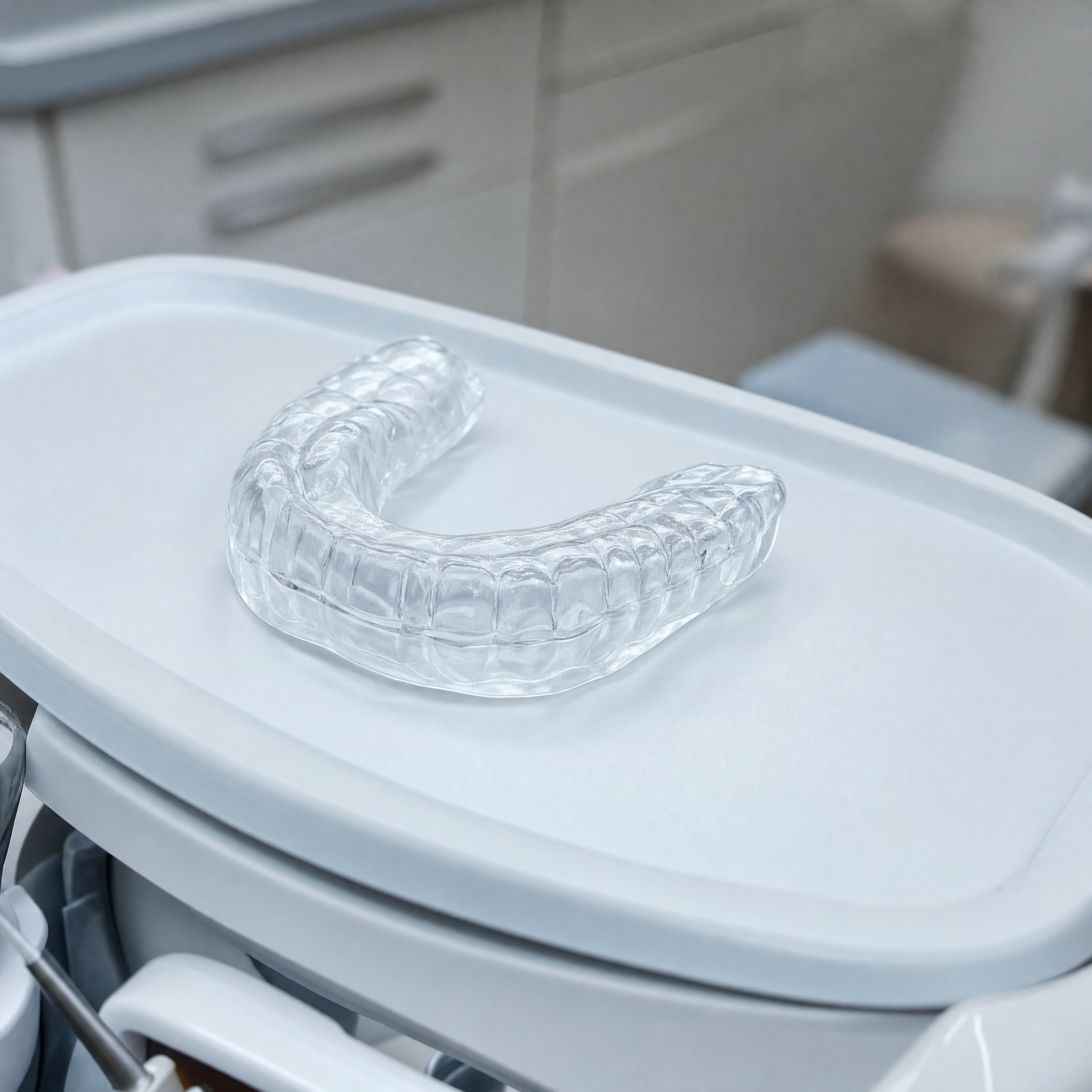
If you’ve never had a guard made, the process is more straightforward than most people expect. Here’s how it usually runs.
First, the assessment. Your dentist looks at your teeth for wear facets (those telltale flat, shiny spots), checks any existing fillings or crowns, and feels your jaw joints and the muscles around them while you open and close. You’ll be asked about your symptoms, your sleep, and whether anything seems to set the grinding off. This part matters because a guard isn’t automatically the right call � sometimes the wear pattern points somewhere else entirely.
Then, impressions or scans. If a custom guard is the plan, the next step is capturing the shape of your teeth. Depending on the practice, that’s either a physical impression (a tray of soft material you bite into for a minute or two � not anyone’s favourite part, but it’s quick) or a digital scan. Those records go to a dental laboratory, which makes the guard to fit your mouth specifically.
Finally, the fit appointment. When the guard comes back, you try it in and your dentist checks how it seats and how your bite lands on it. Small adjustments are normal at this stage � a spot that feels slightly high gets polished down until your bite feels even. You’ll also get shown how to put it in, take it out, and clean it. Most people are in and out of this appointment quickly.
One thing worth saying: if you’re an anxious patient, mention it when you book. None of these steps involve drilling or needles, but knowing what’s coming tends to take the edge off anyway.
What wearing one feels like
Honest answer? The first few nights feel odd. You’re going to sleep with something foreign in your mouth, and your brain notices. Most people describe extra saliva for the first night or two, a vague awareness of the guard, and maybe some weirdly vivid dreams about it. That’s normal, and it passes.
A few practical things from the chairside conversations we have with patients:
- Give it a fortnight. Most people adapt within one to two weeks. Wearing it for an hour while you watch TV in the evening can speed that up, because you get used to the feeling while you’re awake and distracted.
- Your speech will sound different � a slight lisp is common at first. It settles as your tongue works out the new landscape. It also doesn’t matter much, because you’ll mostly be asleep.
- Morning awareness is fine; soreness is not. Noticing the guard when you wake is expected. Waking with new jaw pain, tooth pain, or a bite that feels “off” through the day is not � that’s your cue to call the clinic for an adjustment.
If the guard ends up living in its case on the bathroom bench, tell your dentist. A guard that doesn’t get worn protects nothing, and there’s usually a fixable reason it’s not working � fit, thickness, or the design itself.
Looking after it

A night guard spends its working life in a warm, wet environment, so a bit of daily care keeps it hygienic and helps it last. The routine is simple:
- Rinse it when you take it out, then brush it with a soft toothbrush and cool water. Mild soap works too.
- Skip the toothpaste. Most toothpastes are mildly abrasive and will scratch the surface over time � and scratches are where bacteria settle in.
- Never use hot water. Heat can warp the material, and a warped guard doesn’t fit properly. Lukewarm or cool only.
- Let it dry, then store it in its case. A ventilated case, not a sealed bag or a tissue. Tissue-wrapped guards have a well-documented habit of being thrown out by accident.
- Bring it to your check-ups. Your dentist can inspect it for wear and give it a proper clean, and check that it still fits the way it should.
And one more: keep it away from pets. Dogs, in particular, treat night guards as chew toys with remarkable consistency.
When a night guard may not be enough
A guard protects your teeth from grinding forces. It doesn’t treat the reason you’re grinding in the first place, and it’s not the right tool for every jaw problem. Being upfront about that matters.
If stress or anxiety is driving the clenching � and it often is � the guard manages the symptom while the cause carries on. Some people benefit from looking at the stress side of things alongside dental protection, whether that’s through their GP, a psychologist, or simple changes to caffeine and evening habits. Broken sleep and alcohol close to bedtime can also make grinding worse, which is worth knowing if your symptoms flare after certain nights.
There are also situations where a guard isn’t the whole answer, or isn’t the answer at all:
- Jaw joint (TMJ) problems � clicking, locking, or pain in the joint itself may need a different appliance or a different approach altogether.
- Cracked or heavily restored teeth � if a tooth is already compromised, protecting it may involve more than a guard.
- Suspected sleep apnoea � loud snoring, witnessed pauses in breathing, or waking gasping are not grinding symptoms. Those need medical assessment, and soon, because sleep apnoea carries real health risks. A standard night guard is not a treatment for it.
Sharp tooth pain, facial swelling, or a jaw that locks open or closed are reasons to be seen promptly rather than waiting for a routine appointment. Only an examination can sort out which category you fall into � and that’s genuinely the point of the first visit. If you’re local to Maylands or the surrounding areas like Mount Lawley and Bayswater, a bruxism treatment assessment is the sensible starting point, and it sits within ordinary general dentistry rather than anything exotic.
Frequently asked questions
How much does a custom night guard cost?
It varies depending on the type of guard and what’s involved in your case, so there’s no single honest figure to quote here. What we can say is that cost gets discussed before anything is made � you’ll know what you’re committing to at the treatment planning stage, not after. If budget is a concern, say so at the appointment. There are usually options to talk through, and a conversation costs nothing.
How long does a night guard last?
It depends on how hard you grind. Some people’s guards last years; heavy grinders can wear through one faster. The guard wearing down is actually it doing its job � that’s force that would otherwise be going into your teeth. Your dentist checks its condition at your regular visits and will tell you when it’s getting thin or cracked enough to replace.
Can kids or teenagers get one?
Sometimes, but it’s handled differently. Children and teens are still growing, and their bites are still changing, so a guard needs to account for that � and in many cases, watchful waiting is the more appropriate call. Grinding in younger children often resolves on its own. If you’re worried about your child’s grinding, bring it up at their next check-up rather than buying a guard from the chemist. An ill-fitting guard on a developing bite can cause problems of its own.
Will it stop my jaw from aching?
Many people find their morning jaw tension eases once they’re wearing a well-fitted guard, because the muscles aren’t clenching tooth-on-tooth all night. But it isn’t a certainty � results vary from person to person, and if the ache has another cause, the guard alone won’t resolve it. That’s why the assessment comes first: it gives your dentist a baseline to judge whether things are actually improving.
Can I just wear a sports mouthguard instead?
They’re built for different jobs. Sports mouthguards are designed to absorb impact from a knock; night guards are designed to manage repeated grinding forces and guide your bite into a settled position. A sports guard worn overnight is usually too bulky and soft for the task. If you’re after protection for sport, that’s a separate conversation � the practice makes custom mouthguards for that purpose too.
If your mornings are starting with a sore jaw or you’re noticing changes in your teeth, it’s worth getting looked at rather than waiting it out. The team at Maylands Dental Centre � including Dr Justin Soon (Principal Dentist) and Dr Jackie Bridgwood (Dentist), whose clinician profiles with AHPRA registration numbers are published on the practice website � can assess whether a night guard makes sense for you and talk you through the options.
This article is general information only and isn’t a substitute for personal dental advice. Whether a night guard suits your situation can only be decided with an examination � please consult a dentist about your own circumstances.


 General Dentistry
 Cosmetic Dentistry
 Restorative Dentistry
 Dental Implants
 Orthodontics
 Sleep Dentistry
 Childrens Dentist
 Cosmetic Procedures
 Health Funds
 Government Schemes
 Payment Plan Options