

 By Maylands Dental Centre
If you have significantly crooked or misaligned teeth, you might be wondering about your treatment options. Specifically, you may question whether orthodontic braces for severely crooked teeth can address your concerns or whether jaw surgery might be necessary. This is an important question because the treatment pathway depends on whether the issue involves tooth position alone or includes skeletal jaw misalignment.
Understanding the difference between these two types of severe malocclusion can help you have more informed conversations with your dental professional. Severe dental malocclusion occurs when teeth are misaligned within normal jaw structures, while skeletal severe malocclusion involves misalignment of the jaw bones themselves. Research shows that approximately 15% of orthodontic patients have dental and jaw abnormalities that cannot be fully addressed with braces alone. These patients may be candidates for combined orthodontic and surgical treatment.
The decision about which approach is most appropriate depends on multiple individual factors, including the severity and type of misalignment, your age, jaw development, and overall health. At Maylands Dental Centre in Perth, we can assess your individual situation and discuss appropriate treatment options for crooked teeth. This article provides educational information to help you understand what might be possible, though only a professional consultation can provide personalised recommendations for your specific case.
Blog Navigation
- Summary of the Content:
- Understanding Severely Crooked Teeth and Types of Malocclusion
- When Braces Alone Can Effectively Address Severely Crooked Teeth
- When Jaw Surgery Becomes Necessary
- How Orthodontics and Surgery Work Together to Address Severe Cases
- How to Determine Which Treatment Approach Is Right for You
- Final Thoughts
Summary of the Content:
- Severely crooked teeth may be addressed with braces alone when the issue primarily involves tooth positioning within normally proportioned jaw structures.
- Jaw surgery becomes necessary when skeletal discrepancies exist, meaning the jaw bones themselves are misaligned in size, shape, or position beyond what tooth movement alone can address.
- Dental professionals distinguish between dental severe malocclusion (tooth misalignment) and skeletal malocclusion (jawbone misalignment) through comprehensive evaluation, including clinical examination and diagnostic imaging.
- Combined orthodontic and surgical treatment follows a three-phase approach. These are pre-surgical orthodontics to align teeth within each jaw, jaw surgery to reposition the jawbones, and post-surgical orthodontics to refine the final result.
- Treatment options for crooked teeth depend on multiple factors assessed during professional consultation, including the type and severity of misalignment and individual treatment goals.
- Modern orthodontic and surgical techniques can effectively address even severe cases, with treatment plans individualised based on comprehensive professional evaluation.
Understanding Severely Crooked Teeth and Types of Malocclusion
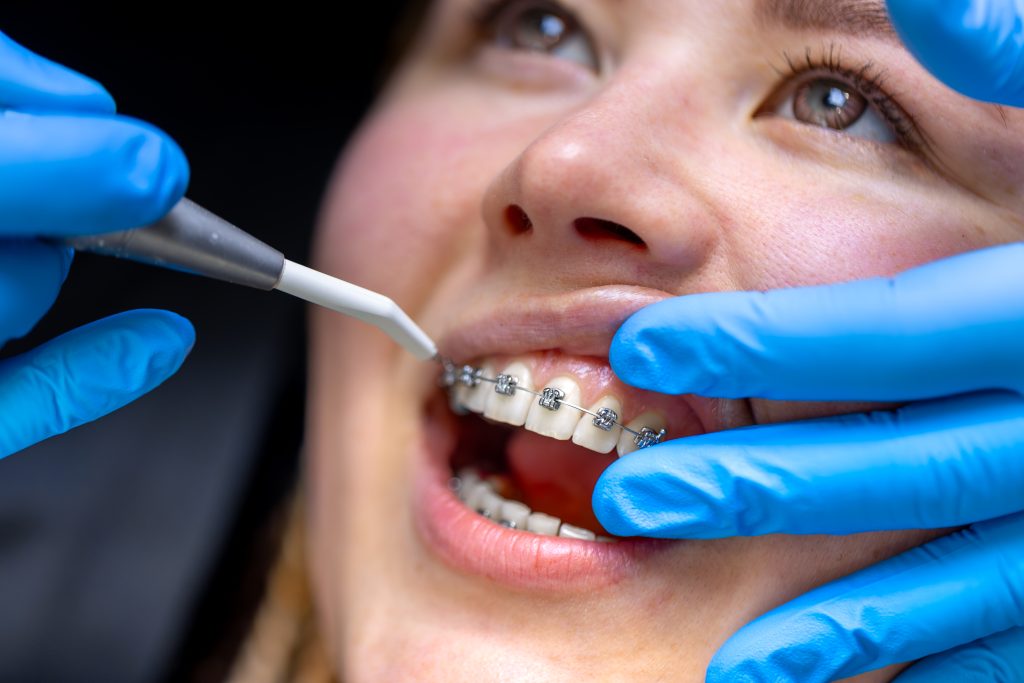
Crooked teeth range from mild cosmetic concerns to severe functional impairments. Severity is typically assessed based on the degree of misalignment and its effects on jaw joint health. This includes the impact on oral function, such as chewing, speaking, and breathing. Dental professionals use classification systems to categorise severe malocclusion, which helps determine appropriate treatment options for crooked teeth.
Types of Severe Malocclusion
- Severe Class II Malocclusion (Overbite):
This condition occurs when the upper jaw significantly overlaps the lower jaw. Upper teeth may protrude outward at an angle, affecting the facial profile and creating functional challenges. Severe malocclusion of this type may be caused by an overdeveloped upper jaw, an underdeveloped lower jaw, or both. The condition affects how the upper and lower teeth meet when you bite down. - Severe Class III Malocclusion (Underbite):
In this type of severe malocclusion, the lower jaw protrudes beyond the upper jaw. The lower teeth sit in front of the upper teeth when the mouth is closed, often creating a characteristic facial appearance. This condition commonly occurs in cases requiring surgical intervention. Many people with severe underbites experience difficulty with biting, chewing, and speaking. - Open Bite:
An open bite creates a gap between the upper and lower front teeth even when the mouth is closed. This condition can affect chewing and speech, and it may develop from prolonged thumb-sucking or genetic factors. An open bite often involves a skeletal component requiring jaw surgery for comprehensive management. The gap prevents proper contact between the front teeth during biting. - Severe Crossbite:
Crossbite misalignment occurs when the upper teeth sit inside the lower teeth. The condition can affect one side (unilateral) or both sides (bilateral) of the mouth. Severe crossbite may contribute to asymmetrical jaw development and can impact jaw joint function. This type of misalignment can create uneven wear patterns on tooth surfaces over time. - Facial Asymmetry:
Facial asymmetry involves an uneven development of facial bones, with one side of the jaw growing at a different rate than the other. This creates a lopsided appearance and functional problems. Significant facial asymmetry typically requires a surgical procedure. The condition affects both appearance and how the teeth on each side meet when chewing.
Dental vs Skeletal Malocclusion:
| Dental Malocclusion | Skeletal Malocclusion | |
| Root cause | Tooth position and alignment | Jaw size, shape, or position |
| Jaw structure | Relatively normal | Jaws don’t fit together properly |
| Can braces help? | Yes — braces for severe cases and clear aligners can typically address this | Partially, tooth movement alone cannot fully manage this type |
| Surgery required? | Generally not | Often, yes — jawbone repositioning may be needed |
| Treatment focus | Moving teeth within the existing jaw structure | Correcting the jaw first, then aligning the teeth |
This distinction is one of the most important factors your dental professional will assess during your consultation. It shapes the entire treatment approach and helps determine whether orthodontic treatment alone is appropriate for your situation.
When Braces Alone Can Effectively Address Severely Crooked Teeth
Modern braces for severe cases can move teeth in virtually any direction by applying mild, consistent pressure. Orthodontic treatment can rotate twisted teeth, close gaps, align crowded teeth, and reposition teeth within the jaw arch. Traditional metal braces, ceramic braces, and clear aligners all work by gradually shifting tooth position. Treatment typically takes 18 to 36 months, depending on complexity, withan average duration of around two years.
Conditions Successfully Addressed with Braces Alone
Braces for severe cases can successfully address a range of orthodontic concerns when jaw size and position are appropriate, including the following:
- Moderate to severe crowding:
This occurs when there isn’t enough space in the jaw for all teeth to fit properly, causing them to overlap, twist, or become misaligned. Braces gradually create space and guide each tooth into its proper position. - Spacing issues:
Gaps between teeth can develop when tooth size doesn’t match jaw size, or when teeth are missing. Braces work to close these spaces and distribute teeth evenly across the arch. - Mild to moderate overbite or underbite:
When the issue stems from tooth angulation rather than jaw position, braces can adjust how the upper and lower teeth meet. This improves both function and appearance without the need for surgical intervention. - Rotation and tipping:
Individual teeth sometimes turn or tilt while the surrounding jaw structure remains in good position. Braces apply targeted pressure to rotate these teeth back into proper alignment. - Post-extraction alignment:
Sometimes teeth are removed to relieve crowding or address other concerns. Braces help close the resulting spaces gradually and prevent neighbouring teeth from drifting.
How Dentists Assess Treatment Potential
Comprehensive Evaluation
- Clinical examination:
Your dentist examines your teeth, bite, and jaw relationship to assess your current oral health and identify any concerns. - Diagnostic imaging:
Dental X-rays, including panoramic radiographs and cephalometric (head) X-rays, provide detailed views of your tooth roots, bone structure, and jaw position. - Photographic records:
Photographs of your face and teeth are taken from multiple angles to document your current conditions and track changes throughout treatment. - Impressions or digital scans:
Dental impressions or digital scans capture the precise shape of your teeth and are used to create models for treatment planning. - Facial and jaw analysis:
Your dentist analyses your facial proportions and jaw relationships to determine the most appropriate treatment approach for your individual needs. - Functional assessment:
An evaluation of your airway, breathing patterns, and temporomandibular joint function helps identify any functional concerns that may influence your treatment plan.
Key Factors That Indicate Braces-Only Treatment:
Several factors indicate that braces for severe cases alone may be sufficient, such as the following:
- Proportional jaw size and position:
Your upper and lower jaws are well related to each other, and the primary concern is tooth position within otherwise normal jaw arches. - Normal skeletal measurements:
Cephalometric analysis shows that your skeletal measurements fall within normal ranges, indicating the bone structure doesn’t require surgical repositioning. - Balanced facial profile:
Despite crooked or misaligned teeth, your overall facial proportions appear balanced and harmonious. - Tooth-based bite discrepancy:
The way your upper and lower teeth meet can be improved by moving the teeth alone, without the need to reposition the jaw bones.
Treatment Process for Severe Cases with Braces
Phase 1: Initial Alignment (4-8 months)
During initial alignment, your dentist focuses on relieving crowding and establishing initial arch form. Teeth may look worse before they look better during this phase as space is created. This is normal and expected in treatment planning. Your dentist is preparing your teeth for the next phase of treatment.
Phase 2: Arch Coordination (6-12 months)
This phase coordinates the width and shape of upper and lower arches. Your dentist addresses bite depth by opening deep bites or closing open bites with tooth movement alone. Treatment may involve using elastics (rubber bands) to adjust tooth position. Regular appointments so that the treatment progresses as planned.
Phase 3: Final Detailing (4-8 months)
Final detailing fine-tunes tooth positions and bite relationships. Your dentist checks proper contact between teeth and achieves ideal alignment and spacing. This phase prepares your teeth for the removal of braces and the transition to retention.
Phase 4: Retention (Indefinite)
After braces are removed, retainers maintain tooth positions. Retainers are typically required indefinitely to prevent relapse, though the wearing schedule may change over time. Retainers may be removable or fixed, depending on case complexity. Consistent retainer wear protects your investment in orthodontic treatment.
What Enhances Treatment Success
Patient compliance with wearing elastics and maintaining oral hygiene greatly influences outcomes. Regularly attend scheduled adjustment appointments and keep treatment on track. Patients should avoid hard foods that could damage braces to prevent delays. Younger patients often see faster results due to active jaw growth and bone remodelling.
Recognised Limitations:
Braces for severe cases have important limitations that should be understood. Braces cannot change jaw size, shape, or fundamental position. They cannot address significant skeletal discrepancies between the upper and lower jaws. Orthodontics has a limited ability to significantly alter the facial profile when skeletal imbalance is present. Braces may achieve dental compensation rather than an ideal skeletal relationship in borderline cases, which means teeth are positioned to mask rather than address underlying jaw discrepancies.
When Jaw Surgery Becomes Necessary
Jaw surgery, also called orthognathic surgery or surgical orthodontics, is a surgical procedure that repositions one or both jawbones to address skeletal misalignment. Jaw surgery addresses functional problems that cannot be addressed by moving teeth alone. Research indicates that approximately 15% of orthodontic patients are candidates for surgical treatment.
Why Surgery May Be Necessary
Surgery becomes relevant when the problem is skeletal (bone position or size) rather than dental (tooth position only). Braces for severe cases can move teeth, but cannot change the fundamental size, shape, or position of jaw bones. In skeletal malocclusion cases, moving teeth alone would create dental compensation without addressing the underlying skeletal discrepancy. This compensation may not be stable in the long term and may not address functional issues that affect your daily life.
Specific Conditions That Often Require Surgery
- Significant Jaw Size Discrepancies:
The upper jaw (maxilla) may be too small, too large, or positioned too far forward or backward. The lower jaw (mandible) may be too small (retrognathic), too large (prognathic), or asymmetric. A discrepancy in jaw sizes creates bite problems that tooth movement alone cannot manage. Your facial profile may be significantly affected by jaw position. - Severe Underbite (Class III Skeletal Malocclusion):
A severe underbite occurs when the lower jaw projects significantly beyond the upper jaw. There’s often a genetic component, and the condition may worsen with growth. A severe underbite can make biting, chewing, and speaking difficult. The characteristic facial appearance includes a prominent chin. Attempting to address this with braces for severe cases alone may result in unstable tooth positions and compromised function. - Severe Overbite with Skeletal Component:
In skeletal overbite, the upper jaw projects abnormally far forward, or the lower jaw sits too far back. This may affect your ability to close your lips comfortably. The condition can contribute to temporomandibular joint problems. Tooth-only compensation may not address the underlying skeletal imbalance affecting facial proportions. - Significant Open Bite:
A gap between upper and lower teeth when the mouth is closed due to skeletal pattern characterises a significant open bite. This affects your ability to bite through foods and often impacts speech. The condition may be associated with airway issues. Skeletal open bite rarely responds to orthodontic treatment alone. - Facial Asymmetry:
Significant deviation of the chin to one side indicates facial asymmetry. Uneven jaw growth results in a lopsided appearance and functional problems, including uneven wear on teeth. This condition cannot be addressed by moving teeth symmetrically on an asymmetric foundation. Jaw surgery repositions the jaw bones to create symmetry. - Obstructive Sleep Apnoea (OSA):
When jaw position contributes to airway obstruction during sleep, jaw surgery may be recommended. Maxillomandibular advancement surgery can increase airway space. In these cases, surgery may be medically necessary rather than elective, as it addresses a health condition affecting sleep quality and overall well-being. - Temporomandibular Joint (TMJ) Disorders:
Severe jaw misalignment contributing to TMJ pain and dysfunction may benefit from surgical intervention. Surgery may be considered when structural jaw position is a causal factor. However, TMJ surgery is generally considered carefully, as outcomes can vary depending on the specific nature of the disorder.
Functional and Medical Indications
Physical Health Impacts:
Several functional concerns may indicate the need for jaw surgery. Difficulty chewing food efficiently can potentially affect nutrition. Speech impediments may relate to jaw positioning. Breathing difficulties, including sleep-disordered breathing, can stem from jaw structure. TMJ pain, clicking, or limitation in jaw movement may be associated with skeletal misalignment. Excessive or abnormal tooth wear due to improper bite forces can damage teeth over time. Gum recession and bone loss from abnormal bite stresses affect long-term oral health.
When Dental Compensation Isn’t Enough
Moving teeth can partially mask skeletal problems through what’s called camouflage orthodontics. However, significant skeletal discrepancies cannot be fully managed this way. Camouflaged cases may have compromised long-term stability. Functional improvements may be limited compared to comprehensive surgical treatment that addresses both the skeletal foundation and tooth positioning.
Age Considerations for Surgery
Timing for Surgical Treatment:
Jaw surgery is typically performed after jaw growth is complete. For females, this usually occurs between ages 16 and 18, when the growth plates fuse. For males, surgery typically occurs between ages 18 and 21 due to later growth completion. Growth must be complete for stable surgical results. Younger patients with severe discrepancies may undergo two-phase treatment: early orthodontic intervention followed by surgery and orthodontics once growth is complete.
Exceptions for Earlier Surgery:
Earlier surgery may be considered for severe functional impairments affecting health and quality of life. Craniofacial syndromes may require earlier intervention. Airway obstruction necessitating urgent treatment doesn’t always wait for growth completion. Each case is evaluated individually by the orthodontic and surgical team.
How Orthodontics and Surgery Work Together to Address Severe Cases
The Orthodontic-Surgical Team Approach
- Collaborative Planning:
Comprehensive evaluation includes 3D imaging (Cone Beam CT), photographs, models, and analysis. Virtual surgical planning can simulate outcomes and plan precise jaw movements. Communication among the dental team helps provide coordinated care throughout treatment, which typically spans two to three years. - Why Both Specialties Are Essential:
Combined treatment addresses both dental and skeletal components of severe malocclusion. Collaboration optimises both functional and aesthetic outcomes for your long-term oral health.
Three-Phase Treatment Timeline
Phase 1: Pre-Surgical Orthodontics (12-18 months typically)
- Goals and Process:
The first phase involves wearing braces to align teeth within each jaw arch. Your dentist levels the bite plane and coordinates arch widths. Teeth are positioned to fit together properly after jaw surgery repositions the bones. Your bite may appear to worsen temporarily during this phase, which is intentional and expected. Creating ideal tooth positions in each jaw prepares for the surgical repositioning of the jaw bones. - What Patients Experience:
During pre-surgical orthodontics, braces are placed on the upper and lower teeth. You attend regular orthodontic adjustments every four to eight weeks. The bite relationship may look worse before surgery, and this decompensation phase is necessary for surgical success. Duration varies by case complexity but typically takes 12 to 18 months.
Phase 2: Orthognathic Surgery (Surgical Day + Recovery)
- Surgical Procedure:
The surgical procedure is performed under general anaesthesia in a hospital setting. Incisions are made inside the mouth (intraoral approach), which typically leaves no visible facial scars. Jaw bones are cut (osteotomy) and repositioned according to the surgical plan. Bones are secured with titanium plates and screws. Surgery may involve the upper jaw (maxilla), lower jaw (mandible), or both. Chin surgery (genioplasty) may be combined if needed for facial balance. Surgery typically takes two to four hours, depending on the complexity. - Immediate Recovery (First 6-8 Weeks):
Immediate recovery during the first six to eight weeks involves a hospital stay of typically one to two days. Swelling and bruising peak around day two to three, then gradually improve. You’ll follow a soft-food or liquid diet for the first four to six weeks. Pain is managed with prescribed medication. Most patients return to work or school after two to three weeks. Strenuous activity is restricted for six to eight weeks. Your jaw may initially be stabilised with elastics or intermaxillary fixation. - Longer-Term Healing:
Longer-term healing continues over many months. Swelling continues to reduce over three to six months. Bone healing occurs over six to 12 months. Sensory changes such as temporary numbness typically improve within 6 to 12 months. A small percentage may have altered sensation. Full healing and final results may take up to one year.
Phase 3: Post-Surgical Orthodontics (6-9 months typically)
- Goals and Process:
After surgery, you continue wearing braces to fine-tune tooth positions now that your jaws are properly aligned. Your dentist checks the bite relationship and details tooth alignment and spacing. Treatment provides proper tooth contacts and achieves the ideal outcome. - What Patients Experience:
Elastics are used to guide bite settling. You attend appointments every four to eight weeks. Gradual bite improvements occur as healing progresses, and final detailing of tooth positions completes the orthodontic phase.
Phase 4: Retention (Indefinite)
- Long-Term Stability:
Retainers are worn after braces removal to maintain tooth positions. Retainers may be removable or fixed, depending on your case. They’re typically worn full-time initially, then nights-only in the long term. Retention is a long-term commitment to preserve results. Follow-up monitoring confirms stable outcomes over time.
Total Treatment Duration:
- Realistic Timeline Expectations:
Total treatment time from start to finish typically spans 24 to 36 months. Variation occurs based on case complexity and individual healing. Pre-surgical orthodontics takes 12 to 18 months. Post-surgical orthodontics takes six to nine months. Active healing after surgery takes 6 to 12 months. Treatment cannot be rushed, as bone healing and tooth movement require time for stable results.
How to Determine Which Treatment Approach Is Right for You
- The Importance of Professional Consultation:
Only qualified dental professionals can accurately assess severity and determine appropriate treatment options for crooked teeth. Clinical examination, imaging, and analysis are required for proper diagnosis. Self-assessment or online quizzes cannot replace professional evaluation. Treatment recommendations must be individualised based on multiple factors specific to your case. - What to Expect at Consultation:
During consultation, expect a comprehensive clinical examination of teeth, bite, jaws, and facial proportions. Diagnostic records include X-rays, photographs, and digital scans or impressions. Your dental professional discusses your concerns, treatment goals, and expectations. They present treatment options, such as braces for severely crooked teeth, appropriate for your specific case. You’ll receive an explanation of risks, benefits, and alternatives for each option. Timeline and cost estimates help you plan. You can ask questions and address concerns about treatment.
Factors Professionals Consider
- Clinical Factors:
Your dental professional considers the type and severity of malocclusion (dental versus skeletal). Your age and growth status matter, particularly whether you’re still growing or have completed growth. Dental health status, including the presence of decay, gum disease, or missing teeth, affects planning. Jaw joint (TMJ) health and function are assessed. Airway and breathing considerations are evaluated. Overall medical health and surgical candidacy are reviewed if jaw surgery is relevant. - Functional Considerations:
The assessment includes the impact on chewing efficiency and nutrition. Effects on speech clarity are evaluated. Breathing difficulties, including sleep-disordered breathing, are considered. Jaw pain or TMJ dysfunction is assessed. The risk of long-term dental problems from current malocclusion is evaluated. These functional factors help determine whether orthodontics alone or combined treatment is most appropriate. - Aesthetic Considerations:
Your concerns about your smile and facial appearance matter in treatment planning. Impact on self-esteem and quality of life is discussed. Realistic expectations about achievable outcomes are established. Understanding that function takes priority over aesthetics in treatment planning helps guide decisions. Your dental professional balances functional treatment with aesthetic improvement. - Practical Considerations:
Time commitment for treatment phases affects planning. Financial investment and available payment options are discussed. Work or school schedule constraints are considered. Patient preference for treatment approach, including willingness to undergo surgery if recommended, factors into decisions. Support system available during recovery if surgery is required is assessed.
Questions to Ask Your Dental Professional
- About Your Specific Case:
Ask these questions to understand your situation: “Is my malocclusion primarily dental (tooth position) or skeletal (jaw position)?” “Can braces alone effectively address my specific concerns?” “If surgery is being recommended, why is it necessary in my case?” “What would be the limitations of addressing this with braces alone?” “What are the realistic outcomes I can expect with each treatment option?” - About Treatment Process:
Important process questions include: “What is the estimated timeline for treatment?” “What are the risks and potential complications of each approach?” “Will I need to be referred to other dental professionals?” “What will recovery involve if surgery is recommended?” “What is required for long-term maintenance after treatment?” - About Practical Matters:
Practical questions to ask include: “What are the costs associated with each treatment option?” “Are payment plans available?” “What does a private health fund cover typically for these treatments?” “How often will I need appointments during treatment?” These answers help you plan for the commitment involved.
Final Thoughts
Severely crooked teeth and jaw misalignment can often be addressed effectively — whether through braces alone or a combination of orthodontic and surgical treatment. The right approach depends on your individual circumstances, and a professional assessment is the most reliable way to understand what’s suitable for you. Modern techniques can manage even complex cases, and outcomes may include improved function, appearance, and everyday comfort, though individual results vary.
If you have concerns about crooked teeth or jaw misalignment, an early consultation can help clarify your options and identify the right time to begin treatment. At Maylands Dental Centre, we can assess your needs and discuss whether braces for crooked teeth may be appropriate for your situation. For cases where surgical input may be beneficial, we work collaboratively with oral and maxillofacial professionals to support a comprehensive approach to care.
You don’t have to navigate this on your own. Contact us to book an orthodontic consultation. We’re here to answer your questions and help you understand what may be right for you, at your own pace and with no pressure.


 General Dentistry
 Cosmetic Dentistry
 Restorative Dentistry
 Dental Implants
 Orthodontics
 Sleep Dentistry
 Childrens Dentist
 Cosmetic Procedures
 Health Funds
 Government Schemes
 Payment Plan Options