

 By Maylands Dental Centre
If you’re considering braces, one of the first questions you’ll ask is how long the treatment will take. This is completely natural. You want to know when you can expect to see your new smile. The honest answer is that the duration of braces treatment varies significantly from person to person. While you might want a quick, definitive answer, the reality is more nuanced.
On average, most people wear braces for 18 to 24 months. However, this is just a starting point. Some individuals with minor alignment issues may complete treatment in 12 to 18 months. Others with complex orthodontic needs might wear braces for 24 to 36 months or longer. The variation depends on multiple factors, including the complexity of your case, your age, the type of braces you choose, and your commitment to following treatment guidelines.
Understanding what affects your orthodontic treatment time helps you set realistic expectations and prepare for the journey ahead. This guide explains the factors that influence treatment duration, the phases you’ll experience, and what you can realistically expect along the way. One of the first questions patients ask is, “How long do braces take?” We’ll address this question and help you understand the factors that influence your individual timeline.
Blog Navigation
- Summary of the Content:
- What's the Average Time for Braces Treatment?
- Key Factors Influencing Your Braces Treatment Duration
- Understanding the Phases of Your Braces Treatment Timeline
- When Will You Start Seeing Results?
- Can Treatment Time Be Shortened?
- Understanding Why Orthodontic Treatment Takes Time
- When Braces Treatment Extends Beyond Initial Estimates
- Final Thoughts
Summary of the Content:
- Treatment duration depends on the complexity of orthodontic issues, patient age, the type of braces used, and patient compliance with wearing prescribed appliances and attending appointments.
- Orthodontic treatment progresses through five distinct phases: consultation and planning, braces placement, active treatment with regular adjustments, braces removal, and the retention phase that maintains results.
- Visible changes often begin within three to six months, but complete treatment addresses bite alignment, root positioning, and stabilisation beyond when teeth simply look straight.
- Patients can help treatment progress efficiently by maintaining compliance, protecting braces from damage, attending all appointments, and maintaining good oral hygiene throughout the process.
- Teeth move through a biological process of bone remodelling that cannot be rushed, as adequate treatment time reduces risks and provides stable, lasting results.
What's the Average Time for Braces Treatment?
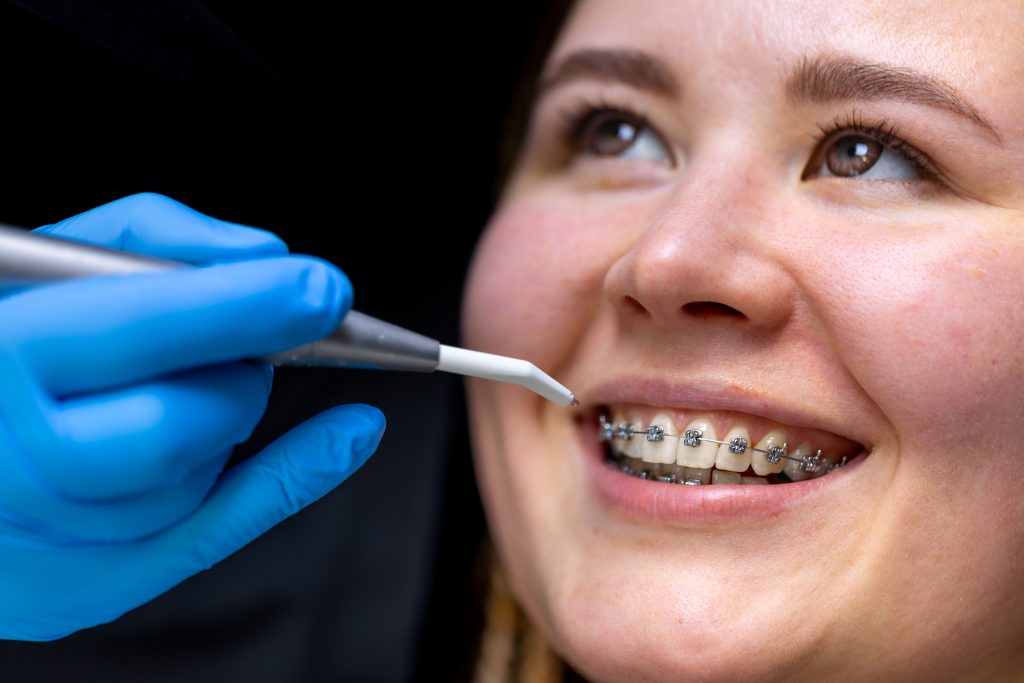
Based on orthodontic literature and clinical experience, the average duration of comprehensive braces treatment is 18 to 24 months. When patients ask, “How long do braces take?”, this timeframe represents the typical answer for most people addressing moderate alignment issues, bite concerns, or spacing problems. However, this is an average, not an accurate one. Your individual braces treatment timeline will depend on your specific needs.
For simple cases involving minor crowding, small gaps, or slight rotations, treatment may take 12 to 18 months. These cases typically involve fewer teeth that need repositioning and minimal bite problems. Patients with moderate complexity usually fall within the 18 to 24-month range. Complex cases that involve severe malocclusion, significant bite issues, or jaw alignment concerns may extend to 24 to 36 months or beyond.
Treatment involves several distinct phases beyond just wearing braces. These include your initial consultation, treatment planning, braces placement, active treatment with regular adjustments, braces removal, and the retention phase. Each phase serves an important purpose in achieving your treatment goals. While the active treatment phase typically lasts 18 to 24 months, the entire process from consultation to completing your retention phase spans a longer period.
Many patients notice visible changes within three to six months of starting treatment. Teeth begin shifting into their new positions relatively early in the process. However, these early changes represent just the beginning. Complete treatment addresses not only the visible alignment of your teeth but also your bite relationship, root positioning, and long-term stability. Your dentist monitors all these factors throughout treatment to determine when you’re ready for braces removal.
Individual variation is significant in orthodontic treatment. Two patients with seemingly similar alignment issues may have different treatment timelines. Factors include how their teeth respond, age, compliance with prescribed appliances, and biological variables. Your dentist will provide a personalised timeline estimate during your consultation, but this estimate may adjust as treatment progresses and they observe how your teeth respond.
Key Factors Influencing Your Braces Treatment Duration
Multiple factors contribute to how long your orthodontic treatment will take. During your consultation, your dentist evaluates these factors to provide you with a personalised timeline estimate. Understanding what influences treatment duration helps you set realistic expectations for your journey with braces in Perth.
Complexity of Orthodontic Issues
The complexity of your orthodontic needs is the most significant factor affecting treatment length. Simple cases involving minor crowding, small gaps between teeth, or mild rotation typically take 12 to 18 months to address. These cases require less tooth movement and often need minimal bite adjustment.
Moderate cases that involve multiple alignment issues or moderate crowding typically take 18 to 24 months. These cases require more extensive tooth movement and often include bite management alongside alignment improvement. Complex cases involving severe malocclusion, significant bite issues, or jaw alignment concerns may extend to 24 to 36 months or longer. Severe cases require careful, gradual movement to address multiple orthodontic problems.
Some patients need tooth extractions to create space for proper alignment. When extractions are necessary, treatment typically takes longer because teeth need to move into the space created by the extracted teeth. This additional movement adds time to the overall treatment process.
Patient Age
Your age influences orthodontic treatment time due to physiological differences in bone tissue. Younger patients, typically aged 12 to 20, often receive treatment slightly more quickly. Active jaw growth and more flexible bone tissue in younger individuals allow teeth to move more readily through the bone. Their bodies respond more quickly to the forces applied by braces.
Adult patients can absolutely achieve desired orthodontic results. However, treatment may take slightly longer for adults compared to younger patients with similar orthodontic needs. In adults, bone tissue responds more slowly to orthodontic forces. The difference is typically modest, often adding three to six months to treatment time in comparable cases.
Age is just one factor among many that influence treatment duration. Your specific orthodontic needs, compliance with treatment guidelines, and individual biological response all play important roles. Adults shouldn’t hesitate to pursue orthodontic treatment based solely on age.
Type of Braces or Orthodontic Appliances
Different types of braces can affect treatment duration, though the differences are often modest. Traditional metal braces represent the standard timeline for orthodontic treatment. These braces are highly effective for all types of orthodontic issues and have been refined over decades of use.
Ceramic braces typically have a similar timeline to traditional metal braces. Some cases may take slightly longer with ceramic braces due to the material properties, but the difference is usually minimal. Ceramic braces offer the aesthetic benefit of tooth-coloured brackets while maintaining effectiveness.
Lingual braces, which attach to the back surfaces of teeth rather than the front, may extend treatment slightly in some cases. The positioning of lingual braces can make adjustments more complex and may affect the rate of certain tooth movements. However, they offer the significant advantage of being virtually invisible from the front.
Clear aligners represent an alternative approach to traditional braces. For mild to moderate cases, clear aligner treatment can be comparable to, or even shorter than, traditional braces.
Your dentist will recommend the most suitable option for your case during the consultation. The goal is achieving comprehensive, stable results rather than simply completing treatment quickly.
Patient Compliance
Wearing prescribed appliances as directed is essential. Many orthodontic cases require rubber bands, headgear, or other appliances in addition to braces. These appliances apply specific forces needed to achieve particular tooth movements or jaw relationships. Inconsistent wear can delay progress by several months.
Attending all scheduled adjustment appointments allows your dentist to monitor progress and make necessary adjustments to your braces. Regular appointments, typically scheduled every four to eight weeks, are planned based on the expected rate of tooth movement. Missing or frequently rescheduling appointments can extend treatment because your teeth may not receive the timely adjustments needed to continue moving towards their target positions.
Maintaining proper oral hygiene throughout treatment is important not just for your dental health but also for keeping treatment on schedule. Poor oral hygiene can lead to gum inflammation or cavities that may require treatment pauses while these issues are addressed. Protecting your braces from damage is important, too. Avoiding hard, sticky, or crunchy foods helps prevent broken brackets or bent wires, which can require adjustment appointments and delay progress.
Understanding the Phases of Your Braces Treatment Timeline
Orthodontic treatment involves multiple distinct phases beyond simply wearing braces. Understanding each phase helps you know what to expect throughout your journey. Each phase serves an important role in achieving lasting results with your braces in Perth.
Phase 1: Consultation and Treatment Planning (1-2 appointments)
Your orthodontic journey begins with a comprehensive consultation. During this initial appointment, your dentist conducts a thorough examination of your teeth, bite, and jaw position. This typically includes X-rays, photographs, and often 3D scans of your teeth and jaws. These diagnostic tools allow your dentist to assess your specific orthodontic needs and overall oral health.
Your dentist will discuss your treatment goals and address any concerns you have about the process. This conversation helps keep your expectations aligned with what orthodontic treatment can realistically achieve. Based on the examination findings and your goals, your dentist develops a personalised treatment plan tailored to your needs.
During the treatment planning phase, you’ll receive an estimate of your orthodontic treatment time, along with information about costs and payment options. This braces treatment timeline estimate is based on your specific case complexity and the dentist’s clinical experience with similar cases. The estimate provides a helpful guideline, though actual treatment time may vary based on how your teeth respond.
Phase 2: Braces Placement (1 appointment, 1-2 hours)
Brace placement is an important milestone in your treatment journey. The appointment typically lasts one to two hours, depending on the complexity of your case and the type of braces you’re receiving. During this appointment, your dentist carefully bonds brackets to each tooth and threads an archwire through the brackets.
The process begins with thoroughly cleaning and preparing your teeth. Your dentist then precisely positions each bracket on your teeth using a special adhesive. After all brackets are bonded, they insert an archwire through the bracket slots and secure it with small elastic ties or metal clips. The archwire applies careful, continuous pressure that begins moving your teeth towards their target positions.
You’ll experience an initial adjustment period after brace placement. Mild discomfort and sensitivity are normal for a few days as your mouth adapts to the braces. Your teeth may feel slightly sore as they begin responding to the mild pressure. Your dentist will provide detailed instructions about oral hygiene with braces and which foods to avoid.
Phase 3: Active Treatment and Regular Adjustments (12-24+ months)
Active treatment is the main phase where your teeth gradually move into their desired positions. This phase typically lasts 12 to 24 months or longer, depending on the complexity of your case. Regular adjustment appointments, scheduled approximately every four to eight weeks, are essential during this phase.
At each adjustment appointment, your dentist checks your progress and makes necessary changes to your braces. This may involve changing the archwire to one with different properties, adjusting the tension, adding or changing elastic ties, or modifying rubber band wear instructions. These adjustments continue guiding your teeth towards their target positions.
Visible changes occur gradually throughout active treatment. During the first three to four months, most patients begin noticing initial tooth movements. By six to eight months, more significant visible changes in alignment become apparent to many patients. After 12 months, continued refinement of tooth position and bite alignment occurs.
Phase 4: Braces Removal (1 appointment, 30-60 minutes)
Brace removal is an exciting milestone after months of active treatment. The removal appointment typically takes 30 to 60 minutes. During this appointment, your dentist carefully removes the brackets and wires from your teeth. This process is generally comfortable and does not damage your tooth enamel.
After removing the brackets, your dentist cleans any residual adhesive from your teeth. They then take impressions or digital scans of your teeth in their new positions. These impressions or scans are used to create your custom retainers, which are essential for maintaining your results.
While braces removal is certainly a milestone worth celebrating, it’s important to understand that this isn’t the end of your orthodontic care. The retention phase that follows is just as important as active treatment for confirming your results last.
Phase 5: Retention Phase (Lifelong commitment, active phase 6-12+ months)
Retention is essential for maintaining your orthodontic results. After braces removal, your teeth need support during the bone remodelling process. Without retainers, teeth can gradually shift back towards their original positions. This movement, called relapse, can occur because the bone and tissues around your teeth need time to stabilise in their new positions.
During the initial retention phase, you’ll typically wear your retainers full-time, removing them only for eating and oral hygiene. This intensive retention period usually lasts several months. Your dentist will provide specific instructions about how long to wear your retainers during this phase based on your individual case.
After the initial phase, most patients transition to wearing retainers only at night. Many dentists recommend long-term night-time retainer wear, often several nights per week indefinitely. This ongoing retention helps protect your investment in orthodontic treatment and maintains your smile for years to come.
Retention requires commitment, but it’s a small investment compared to the time you spent in active treatment. Following your dentist’s retention guidelines helps maintain your results.
When Will You Start Seeing Results?
One of the most common questions patients ask is when they’ll notice their teeth moving. Understanding the typical timeline for visible changes helps you maintain realistic expectations during treatment. However, remember that individual experiences vary based on your specific orthodontic needs and how your teeth respond.
Within two to three months, many patients notice subtle changes in tooth position. These early changes may be most noticeable to you because you see your smile every day. Close friends and family might also begin noticing slight improvements. By four to six months, more noticeable alignment improvements become apparent for most patients. Crowding typically begins to improve, and gaps start to close during this period.
Between 6 and 12 months, significant visible changes in your smile occur. This is often when patients feel most encouraged about their progress and the investment they’re making in treatment.
From 12 to 24 months and beyond, continued refinement and final positioning take place. While the early changes may slow, this later phase remains essential. Your dentist is fine-tuning your bite relationship, adjusting root positions, and confirming long-term stability.
Your dentist monitors both visible and non-visible factors throughout treatment. They use their clinical experience and diagnostic tools to determine when all aspects of your case have been adequately addressed. Trusting this professional judgment helps you achieve lasting, stable results.
Can Treatment Time Be Shortened?
Many patients wonder whether there are ways to minimise the duration of their brace treatment. While this desire is understandable, it’s important to recognise that effective treatment should never be rushed. Attempting to accelerate tooth movement beyond biological limits risks damaging your teeth and compromising your long-term results.
However, there are factors within your control that can help your treatment progress efficiently as planned. Understanding what you can influence versus what remains outside your control helps you focus your efforts appropriately.
What Patients Can Do
Proper compliance with your dentist’s instructions helps treatment proceed efficiently. Wearing rubber bands, headgear, or other prescribed appliances exactly as directed applies the forces needed to achieve specific tooth movements. Inconsistent wear delays progress because teeth don’t receive the continuous forces required for efficient movement.
Maintaining all scheduled adjustment appointments allows your dentist to monitor progress and make timely adjustments to your braces. Each appointment is scheduled based on expected tooth movement rates. Attending appointments as scheduled helps keep treatment on track. Missing or frequently rescheduling appointments can delay progress by allowing teeth to move without proper guidance or preventing necessary adjustments from being made on time.
Protecting your braces from damage helps prevent delays from adjustments. Broken brackets or bent wires require appointments and can interrupt the planned tooth movement sequence. Avoiding hard, sticky, or crunchy foods that can damage brackets or wires helps prevent these setbacks.
Maintaining proper oral hygiene throughout treatment is important for keeping treatment on schedule. Poor oral hygiene can lead to gum inflammation or tooth decay that may require treatment pauses while these issues are addressed. Healthy gums and teeth can move more readily.
Reporting issues promptly when they occur allows for a quick answer. If a bracket breaks, a wire becomes loose, or you experience any problems with your braces, contact your dentist promptly to prevent minor issues from becoming major delays.
Strong compliance may help your treatment proceed efficiently in accordance with the original plan. While compliance cannot shorten the timeline beyond the estimate, it helps avoid delays that could extend treatment beyond the initial estimate.
What’s Outside Patient Control
Several factors affecting treatment duration remain outside your control. Biological factors, including your individual rate of bone remodelling and tooth movement, vary from person to person. Some patients’ teeth respond quickly to orthodontic forces, while others’ teeth move more gradually. This variation is normal and doesn’t reflect the quality of treatment.
The complexity of your orthodontic issues determines the amount of tooth movement and treatment needed. More complex cases inherently require more time to address comprehensively. Individual anatomical factors, such as bone density, root length and shape, and gum tissue characteristics, also influence how readily teeth move.
Brief Mention of Accelerated Options
Some orthodontic clinics offer technologies designed to facilitate tooth movement. These approaches should only be used under professional guidance and when appropriate for your specific case. During your consultation, your dentist can discuss whether accelerated treatment options are suitable for you. These technologies represent options for suitable candidates rather than universally applicable methods.
Understanding Why Orthodontic Treatment Takes Time
Orthodontic treatment requires adequate time because of the biological processes involved in tooth movement. Understanding why treatment cannot be rushed helps you appreciate the care being taken with your smile. Teeth move through a carefully controlled process of bone remodelling. When orthodontic pressure is applied to a tooth, the bone on the pressure side gradually resorbs. Simultaneously, new bone forms on the tension side through a process called deposition.
This bone remodelling process occurs at a specific biological rate that cannot be accelerated beyond certain limits. Rushing tooth movement can lead to several complications. Root resorption, or shortening of the tooth roots, can occur when excessive force is applied or when movement is attempted too quickly. This damage to tooth structure compromises the long-term health of your teeth.
Adequate treatment time allows several important processes to occur properly. Proper bone remodelling and stabilisation around teeth in their new positions takes time. Root positioning, not just the visible crown alignment, must be addressed for long-term stability. Allowing proper bone remodelling reduces the risk of teeth gradually shifting back towards their original positions after treatment ends.
When Braces Treatment Extends Beyond Initial Estimates
Several common reasons explain why treatment may extend beyond initial estimates. Individual variation in how teeth respond to orthodontic forces means some patients’ teeth move more gradually than anticipated. This slower response is a biological variation, not a reflection of treatment quality or the dentist’s skill.
Compliance challenges can affect treatment duration. Inconsistent wear of prescribed rubber bands or other appliances, missed or frequently rescheduled appointments, or damage to braces from prohibited foods can all add time to treatment. Even with the strongest intentions, life circumstances sometimes make compliance challenging.
Occasionally, additional issues are discovered during treatment. As treatment progresses and teeth move, your dentist may identify concerns that weren’t visible during the initial examination. Addressing these issues comprehensively maintains the quality of your final results.
Extensions are a normal part of individualised orthodontic care rather than failures or problems. Initial timeline estimates represent professional predictions based on clinical experience and your specific case. However, these estimates cannot account for every variable in how your individual teeth will respond to treatment.
Open communication with your dentist about concerns about the timeline is important. Your dentist can explain the specific reasons why your treatment is taking longer than initially estimated and what still needs to be accomplished. The quality of your final results matters more than adhering to an arbitrary timeline. Taking the additional time needed to achieve optimal results provides value that lasts far beyond the inconvenience of a few extra months in braces.
Final Thoughts
Braces treatment typically takes 18 to 24 months, with significant variation between individuals based on case complexity and personal factors. While the question “How long do braces take?” has a typical answer, this timeline is an average based on orthodontic experience and may not apply to all. Multiple factors influence your specific treatment duration, including the complexity of your orthodontic issues, your age, the type of braces you choose, and your compliance with treatment guidelines.
The phases of treatment extend beyond just wearing braces. From your initial consultation through active treatment, brace removal, and the retention phase, each stage serves an important purpose in achieving lasting results. Understanding these phases helps you maintain realistic expectations throughout your orthodontic journey.
Patient compliance, regular appointment attendance, and patience all contribute to achieving your treatment goals efficiently. While you cannot control biological factors or the inherent complexity of your case, you can influence how smoothly your treatment progresses by following your dentist’s guidance carefully.
Rather than fixating on a specific timeline, focus on the end goal: a healthy, properly aligned smile. The time invested in comprehensive orthodontic treatment provides long-term benefits. Properly aligned teeth are easier to clean, function more efficiently, and are less prone to excessive wear. The investment in proper treatment time pays dividends in oral health, function, and self-esteem for years to come.
If you’re considering braces in Perth, Maylands Dental Centre offers comprehensive orthodontic consultations to assess your specific needs and provide a personalised treatment plan. During your consultation, your dentist will examine your teeth, discuss your goals, and provide a timeline estimate based on your individual case. We’re here to guide you through every phase of your orthodontic journey with professional care and support.
Contact Maylands Dental Centre to schedule your consultation and take the first step towards achieving a healthy, aligned smile. We look forward to helping you understand your treatment options and supporting you throughout your orthodontic journey.



 General Dentistry
 Cosmetic Dentistry
 Restorative Dentistry
 Dental Implants
 Orthodontics
 Sleep Dentistry
 Childrens Dentist
 Cosmetic Procedures
 Health Funds
 Government Schemes
 Payment Plan Options