

 By Maylands Dental Centre
Maylands Dental Centre in Maylands provides local dental care information for patients planning treatment.
Wisdom teeth may emerge gradually over several months or years. One tooth can become visible while another remains beneath the gum, and some never break through at all. At Maylands Dental Centre, people often ask about this stop-and-start pattern because visible eruption does not always reveal the tooth’s position or whether it has enough room.
The useful distinction is between timing and position. Timing describes when you notice a tooth. Position describes how it sits beneath or through the gum. A dental examination, sometimes supported by appropriate imaging, can provide more information than age or symptoms alone.
How long does it take for wisdom teeth to come in?
There is no single eruption timetable. A wisdom tooth may move into the mouth over months, appear intermittently over several years or remain partly covered by gum. Different wisdom teeth in the same person can follow different patterns, so the first visible edge does not predict when the whole tooth will emerge.
This happens because eruption is not simply a tooth moving upwards on a fixed schedule. Jaw growth, available space, the tooth’s angle and the surrounding gum can all affect what becomes visible. A tooth may also be developing beneath the gum long before you can see or feel it.
What does “coming in” actually mean?
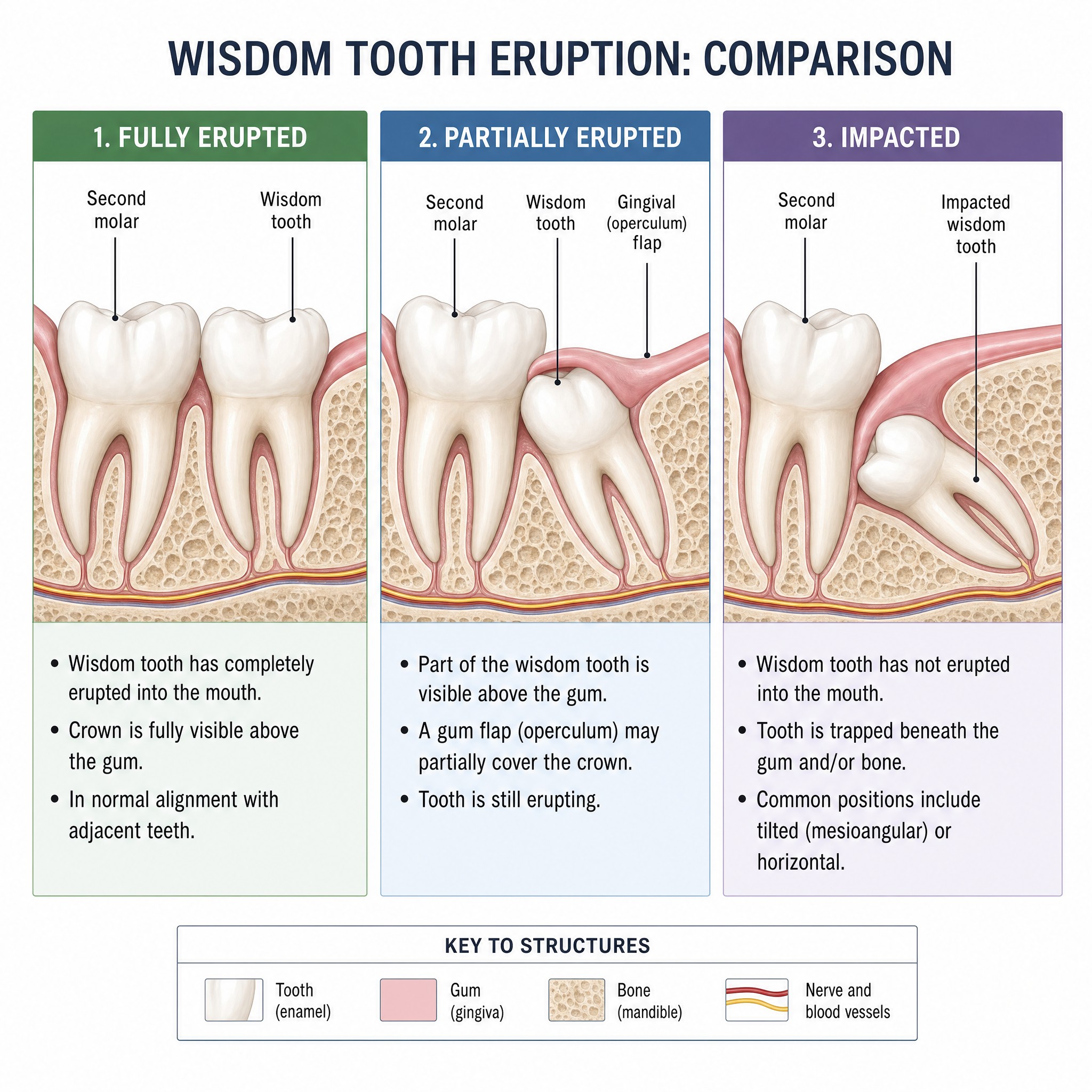
People often use “coming in” to describe several different stages:
- The wisdom tooth is developing within the jaw but remains beneath the gum.
- A small part of the tooth has appeared through the gum.
- More of the crown is becoming visible over time.
- The tooth has erupted far enough to meet the tooth above or below it.
These stages do not always progress in a straight line. You might notice a small white edge, then see little visible change for months. That pause does not show, by itself, whether the tooth will continue to erupt.
A dentist can assess the gum, the space behind the second molar and the direction of the wisdom tooth. Imaging may be considered when the tooth’s position cannot be understood from the mouth alone. The purpose is to determine what is happening in your circumstances, not to apply a universal deadline.
At what age do wisdom teeth usually appear?
Wisdom teeth, also called third molars, commonly become noticeable during the late teenage years or early adulthood. That is a broad life stage rather than a strict age range. Some emerge earlier or later, while others remain below the gum and never become visible.
Development and eruption are different. A wisdom tooth can be forming beneath the gum even though nothing is visible in the mouth. Conversely, a small part of the crown may appear while the rest remains covered by gum or bone.
Age also cannot show whether there is enough space behind your existing molars. Two people of the same age can have very different jaw dimensions, tooth angles and eruption patterns. Even your four wisdom teeth may develop at different rates.
If you are unsure what is happening, note when you first saw or felt a change and whether symptoms are becoming more frequent. That information can help during an assessment, but it does not replace examination of the area.
What can wisdom tooth eruption feel like?
An erupting wisdom tooth may cause tenderness in the gum behind the last visible molar. Some people describe pressure, an ache that comes and goes or irritation when chewing near the area. Others notice no symptoms and discover the tooth during a routine dental visit.
Symptoms can fluctuate. Gum may become irritated when a new part of the tooth appears or when food and plaque collect around an area that is difficult to reach. The discomfort may settle and then return if the surrounding tissue becomes irritated again.
Why symptoms do not confirm the cause
Discomfort at the back of the mouth is not automatically caused by a wisdom tooth. Gum inflammation, decay, jaw-muscle strain and problems affecting a neighbouring tooth can produce sensations in a similar area. A self-diagnosis based on location alone may therefore miss the actual source.
Keep track of how long the symptom lasts, whether it is worsening and whether swelling or an unpleasant taste is present. Continue ordinary oral hygiene without forcing a brush into tender tissue. Healthdirect Australia provides broader Healthdirect dental care guidance about oral hygiene and the role of dental check-ups.
An assessment becomes more important when discomfort persists, repeatedly returns or interferes with eating, sleeping or opening your mouth. The aim is to identify the cause before discussing what, if any, treatment is appropriate.
Why might a wisdom tooth only come through part-way?
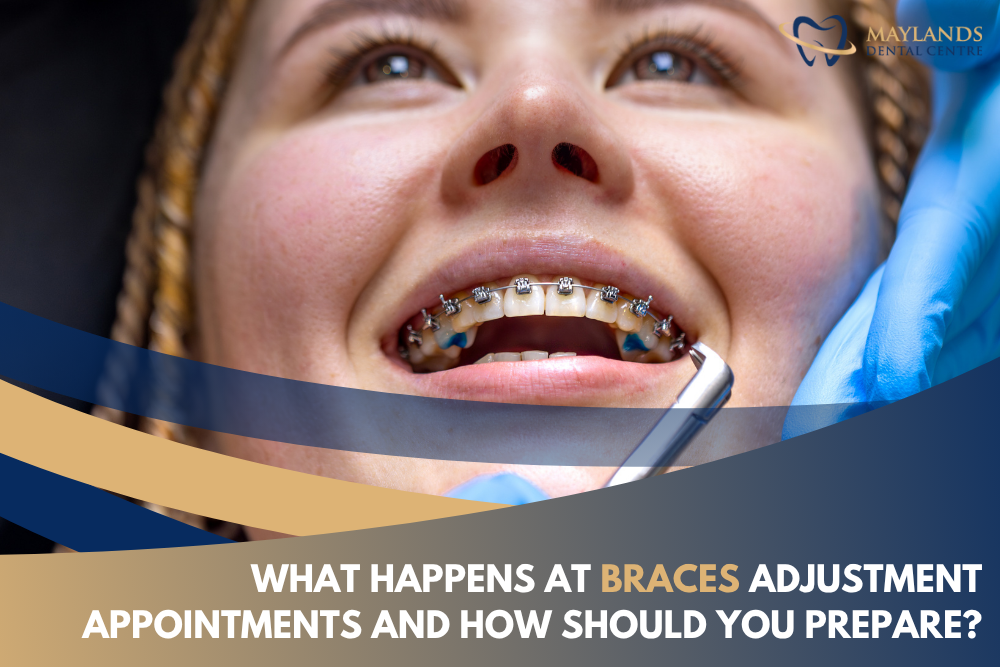
A wisdom tooth may only partly emerge when there is limited room behind the second molar or when the tooth is angled away from a clear eruption path. It may also remain partly covered by gum. This is called partial eruption; it does not mean removal is automatically needed.
A flap of gum can sit over part of the tooth’s crown. Food and plaque may collect beneath or around that flap, while the tooth’s location makes brushing difficult. The area can then become tender or swollen. Cleaning access, recurring symptoms and the tooth’s relationship with nearby structures all matter when a dentist considers the next step.
Wisdom tooth eruption patterns and what they mean
| Eruption pattern | What it means | What you may notice | Why assessment may help |
|---|---|---|---|
| Fully erupted | The crown has emerged through the gum | The tooth is visible behind the second molar and may be reachable with a toothbrush | A dentist can check its position, function and cleaning access |
| Partly erupted | Some of the crown is visible while gum still covers part of it | Intermittent tenderness, trapped food or difficulty cleaning the back edge | Assessment can identify gum irritation, available space and effects on the neighbouring tooth |
| Impacted | The tooth remains trapped beneath gum or bone, or cannot move into a usual position | There may be no symptoms, or discomfort may occur around the back of the jaw | Imaging may help show the angle, depth and relationship to nearby structures |
The descriptions in this table explain position, not a treatment decision. A fully erupted tooth may still be difficult to clean, while an impacted tooth may cause no noticeable problem. What matters is the individual combination of symptoms, position, nearby tissues and ongoing cleaning access.
If a partly erupted tooth repeatedly becomes irritated, a dentist may discuss cleaning measures, monitoring or other options based on the findings. When removal enters that discussion, the decision should follow an individual clinical assessment rather than the appearance of the tooth alone.
When should you ask a dentist about an erupting wisdom tooth?
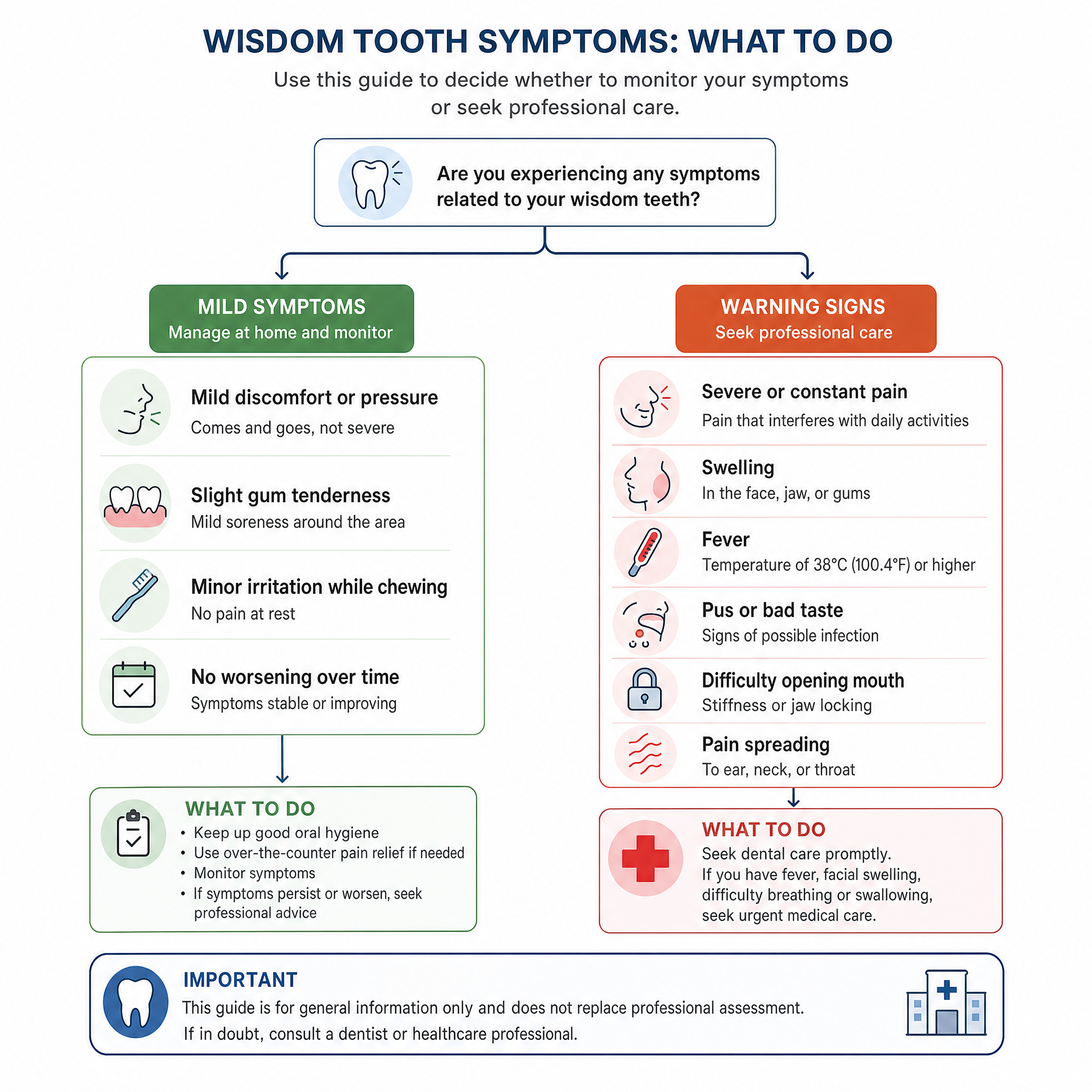
Arrange a dental assessment when pain is persistent or worsening, swelling develops, opening your mouth becomes difficult, or you notice an unpleasant taste. Fever or trouble swallowing also warrants prompt professional advice. These signs can have several causes, and an examination is needed to identify what is affecting you.
Seek urgent dental or medical advice if swelling affects your breathing or swallowing. Do not wait for the tooth to finish erupting before asking for help in that situation.
Wisdom tooth symptoms and when to seek advice
| What you notice | When to seek advice | What may be assessed |
|---|---|---|
| Mild pressure or brief tenderness | Mention it at a routine visit if it settles and does not recur | Gum condition, cleaning access and eruption stage |
| Pain that persists, worsens or keeps returning | Arrange a dental assessment | Wisdom tooth position, neighbouring teeth and possible sources of inflammation |
| Swelling, unpleasant taste or difficulty opening the mouth | Seek prompt dental advice | Gum tissue, trapped debris, infection signs and available space |
| Fever or trouble swallowing | Seek prompt professional advice | The extent of inflammation and whether further care is needed |
| Swelling affecting breathing or swallowing | Seek urgent dental or medical advice | Immediate management of swelling and the airway |
During an appointment, a dentist may examine the gum around the wisdom tooth, check the neighbouring molar and assess how much room is available. They may also consider the direction of eruption and whether imaging is appropriate.
For readers in Maylands and nearby parts of Perth, including Mount Lawley and Bayswater, Maylands Dental Centre is a local place to discuss changing symptoms. The practice provides general dentistry, family dental care and preventive dental care. Its website also publishes clinician profiles with AHPRA numbers, giving patients a way to check practitioner details.
The team includes Dr Justin Soon, Principal Dentist, and Dr Jackie Bridgwood, Dentist. Advice about an erupting wisdom tooth should still be based on your examination and circumstances rather than general online information.
What happens if your wisdom tooth does not come in?
A wisdom tooth can remain beneath the gum without causing noticeable symptoms. This may occur because the tooth is angled, lacks an eruption path or remains enclosed within gum or bone. The absence of visible eruption does not, on its own, show whether treatment is needed.
Monitoring and treatment decisions depend on several factors: symptoms, tooth position, access for cleaning and any effects on neighbouring teeth or tissues. A dentist may recommend observation when the findings support it. In other situations, recurring inflammation or changes affecting nearby structures may lead to a discussion about treatment.
Removal is not an automatic outcome for a tooth that has not erupted. The potential benefits, limitations and risks need to be considered for the individual tooth and person. If removal is discussed, you may also want to read about understanding wisdom tooth removal costs and anaesthesia options for wisdom teeth removal.
Any surgical or invasive procedure carries risks. Before proceeding, you should seek a second opinion from an appropriately qualified health practitioner.
If a dentist recommends removal, preparation should include a discussion of the procedure, expected recovery, possible complications and aftercare. The practice’s guide to caring for your teeth after wisdom tooth removal explains the practical care stage in more detail.
Frequently Asked Questions about wisdom teeth coming in
Can wisdom teeth take years to come through?
Yes. A wisdom tooth may emerge in stages over months or years, and it can remain partly covered by gum for an extended period. Visible progress alone does not reveal the tooth’s full position. A dental examination can clarify whether it is erupting, partly erupted or remaining beneath the gum.
Can wisdom teeth stop and start erupting?
Wisdom tooth eruption can appear to stop and start. You may notice a new edge of tooth, followed by months with little visible change. Symptoms can also come and go as the surrounding gum changes or becomes irritated. Repeated discomfort should be assessed rather than judged only by the eruption timeline.
Do all four wisdom teeth appear at the same time?
No. Each wisdom tooth can develop and erupt on its own schedule. One may be fully visible while another is partly erupted or remains under the gum. Some people do not develop all four. An examination and, when appropriate, imaging can show which teeth are present and how they are positioned.
Does discomfort mean a wisdom tooth needs removal?
Not necessarily. Discomfort may come from irritated gum, difficult cleaning or another dental problem. Removal should only be considered after an individual assessment of the cause, tooth position, symptoms and nearby structures. Maylands Dental Centre can examine the area and discuss options relevant to your circumstances.
Should I wait for the tooth to finish coming in?
Waiting may be reasonable when there are no concerning symptoms, but the answer depends on the tooth’s position and cleaning access. Seek advice sooner for persistent pain, worsening swelling, fever, an unpleasant taste, difficulty opening your mouth or trouble swallowing.
Understanding your own eruption timeline
The time it takes for a wisdom tooth to emerge is less important than how it is positioned, whether you can clean around it and whether symptoms are developing. A tooth can erupt slowly without causing trouble, remain partly visible or stay beneath the gum.
Pay attention to changes rather than trying to predict a completion date. If symptoms persist or recur, a dentist can assess the gum, neighbouring teeth, available space and tooth position. This article provides general information only. Consult a dentist for advice about your own circumstances.
This article was researched and drafted with AI assistance.



 General Dentistry
 Cosmetic Dentistry
 Restorative Dentistry
 Dental Implants
 Orthodontics
 Sleep Dentistry
 Childrens Dentist
 Cosmetic Procedures
 Health Funds
 Government Schemes
 Payment Plan Options