

 By Maylands Dental Centre
Pregnant and unsure whether to agree to a dental X-ray? Start with what the image is for and which type your dentist is proposing.
The short answer
- Standard dental X-rays can be taken during pregnancy with safeguards under Australia’s 2025 code.
- 3D scans (CBCT) should wait until after pregnancy where practicable.
- Tell us you’re pregnant when booking and at your visit. At Maylands Dental Centre, we discuss your treatment plan before starting procedures.
If you also feel nervous about the appointment, our article on how to talk about dental anxiety may help you prepare for that conversation.
Should I decline dental X-rays because I’m pregnant?
Pregnancy alone doesn’t settle the decision. Your dentist needs to weigh the expected benefit of the image against its risks and consider other ways to answer the same question.
The Australian Radiation Protection and Nuclear Safety Agency (ARPANSA) code, published in February 2025, distinguishes standard dental images from 3D scans called cone beam computed tomography (CBCT). Ask your dentist which examination they mean and how the result would change your care.
Pregnancy, Birth and Baby recommends telling both the receptionist and your dentist that you are pregnant, so the team can take the necessary precautions.
If a sore or broken tooth prompted the appointment, tell us that when you call about our emergency dentist service. The Australian Dental Association explains that dental X-rays may help find the cause of a sore tooth during pregnancy. Ask what the proposed image would add to the examination.
Questions to ask before any dental X-ray
- What is the purpose of the X-ray, and how would the result change my care?
- Is it a standard X-ray or a 3D scan (CBCT), and could it wait?
- Could my earlier dental images help answer the question?
- Is there a way to answer the question with less or no radiation?
- How will you keep the X-ray beam away from my abdomen?
Does the type of dental image change the advice?
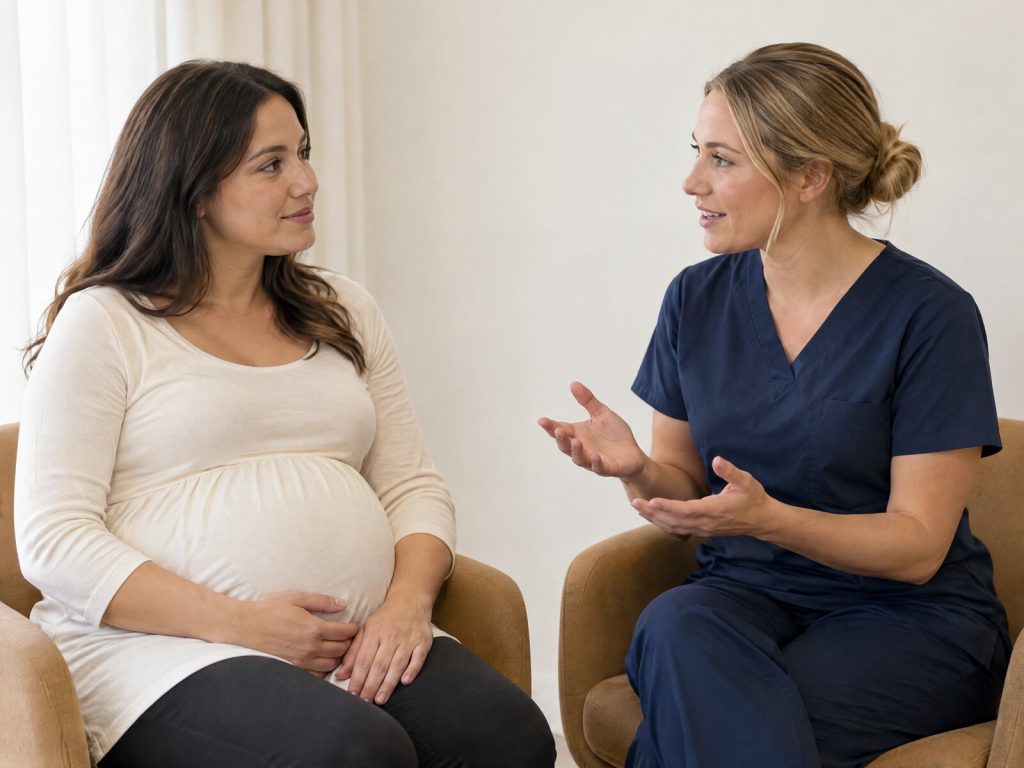
Yes. The 2025 code gives different guidance for standard dental images and 3D scans (CBCT). The direction of the X-ray beam matters too.
ARPANSA sets out the following pregnancy guidance in section 3.3:
| Type of dental image | What the code says |
|---|---|
| Standard X-rays: inside the mouth (intraoral), panoramic or side-of-head (cephalometric) images | These examinations can be undertaken during pregnancy. They should follow best practice, avoid exposing the abdomen and use a beam narrowed to the area needed. |
| 3D scans (CBCT) | Delay until after pregnancy where practicable. If that is not practicable, abdominal shielding should be considered and advice sought from a qualified expert. |
| Images with the beam directed towards the abdomen | These exposures should be avoided during pregnancy. The code gives a vertical occlusal projection as an example. |
Collimation means restricting the size and shape of the radiation beam. ARPANSA’s radiation safety guide explains beam restriction; ask your dentist how they will limit the area exposed for your image.
“Where practicable, the use of cone beam computed tomography should be delayed until after pregnancy.”
— ARPANSA, Code for Radiation Protection in Dental Exposure (2025), section 3.3
For your own appointment, ask why the proposed image is needed now, what the alternatives are, and what the risks of proceeding or waiting would be.
Why might one dentist use a lead apron and another not?
Australian guidance distinguishes routine dental imaging from particular circumstances, including a 3D scan that cannot wait. Here is what the Australian bodies say, checked on 18 October 2026.
| Australian body | Published shielding advice |
|---|---|
| ARPANSA | Its dental imaging advice says lead aprons are not usually or routinely required because modern dental X-ray doses are low and well controlled. Its 2025 code, section 3.3 separately says to consider abdominal shielding and seek qualified-expert advice when a CBCT cannot practicably wait until after pregnancy. |
| Australian Dental Association | Its dental X-ray guidance repeats that aprons are not routinely needed, but says your dentist may use one to cover your chest and belly during pregnancy. Its pregnancy page also says an apron may be used for some X-rays. |
Ask: “For this particular image, why are you recommending an apron, or not recommending one? If this is a CBCT, can it wait, and do we need advice from a qualified expert?” The decision still starts with whether the image is needed.
What do the published radiation figures actually describe?
They describe general radiation exposure comparisons, not your baby’s dose. The following figures are from the “Radiation exposure” infographic in the ARPANSA-hosted dental imaging brochure, checked on 18 October 2026.
- Living each day: 5 microsieverts.
- Dental X-rays (other than CBCT): 10 or less microsieverts.
- A flight from Darwin to Perth: 16 microsieverts.
- Medical chest X-ray: 20 microsieverts.
- A flight from London to Melbourne: 42 microsieverts.
- Dental CBCT: Less than 80 microsieverts.
- Average annual background radiation in Australia: 1700 microsieverts.
- Medical chest CT: 7000 microsieverts.
The brochure does not give a separate dose for each machine, scan setting or person. Its “Less than 80” label is a brochure comparison, not a ceiling for every CBCT. Ask your dentist about the proposed examination rather than using these figures to calculate a personal risk percentage. The 2025 code’s CBCT advice still applies.
Could my previous dental images help?
Yes, previous images and records are part of the assessment, though they may not replace a new examination.
The code requires your dentist to consider available dental records and alternatives that could answer the same question with less or no radiation. Its pregnancy guidance also takes previous radiological procedures into account.
If another practice has taken images, tell your dentist where and roughly when. Ask whether those records could help answer today’s concern before agreeing to repeat imaging.
What if I am in the first trimester?
Discuss the reason and timing of the examination with your dentist rather than using a trimester alone to decide.
Pregnancy, Birth and Baby, reviewed August 2025, says X-rays are generally not recommended during pregnancy, especially in the first trimester. It also says most dental X-rays are safe because the radiation doses are very small.
ARPANSA’s code adds the examination-specific guidance above. Ask your dentist how that guidance applies to the image they are proposing, including its benefits, radiation risks and whether it could wait.
The Australian Dental Association’s pregnancy guidance, checked on 18 October 2026, says you can visit your dentist at any time in pregnancy and that dental X-rays can be taken during pregnancy. It describes the second trimester as more comfortable for some people: nausea may have eased, while lying back can become uncomfortable later in pregnancy.
That comfort advice answers when a visit may feel easier. ARPANSA’s 2025 code answers a different question: which image is proposed and how it should be justified and taken. Its pregnancy section distinguishes image types rather than setting a trimester cut-off.
A script when the timing advice sounds different
You can say: “I am pregnant and in my first trimester. I have read advice to be cautious with X-rays, but also that dental images can be taken. Is this a bitewing, panoramic image or CBCT? What would change in my care if we wait? Could an earlier image answer the question?”
What if I had an X-ray before I knew I was pregnant?
Talk to your dentist or pregnancy healthcare professional about the examination you had and when it happened.
Ask the practice which type of image was taken. That gives your healthcare professional the details of your examination to discuss with you.
Who pays for a dental X-ray during pregnancy?
Most dental care is not covered by Medicare, according to healthdirect’s dental costs guidance, reviewed October 2023. Private health insurance extras may contribute, but cover and annual limits vary. Before the image, ask for the item number, the fee and any benefit that applies to you.
The Child Dental Benefits Schedule (CDBS) includes X-rays for eligible children aged 0–17. Services Australia lists a cap of $1,158 over two consecutive calendar years when the child’s first eligible service in that period is in 2026. Eligibility also requires Medicare eligibility and an eligible payment to the child or their parent, carer or guardian during the calendar year. Check the remaining balance and any item or time restrictions before treatment. This is child cover, not an adult pregnancy rebate.
Finding an X-ray item in the Medicare Benefits Schedule does not mean it applies to every dental visit. Two examples show why the item description matters:
- MBS item 75023 describes a single-area intraoral periapical or bitewing film under cleft and craniofacial services. Its schedule fee is $55.55, updated 1 July 2026. It is not a general pregnancy X-ray benefit.
- MBS item 57966 covers orthopantomography for diagnosis or management of missing or crowded teeth, or developmental anomalies of the teeth or jaws. Its schedule fee is $55.90, updated 1 July 2026. It describes a panoramic examination, not a chairside bitewing.
Those schedule fees are not Maylands quotes or amounts you will necessarily receive. Whether a benefit applies depends on the relevant item, patient eligibility, provider and referral requirements. Ask the practice or imaging provider to confirm your expected out-of-pocket cost.
At Maylands, our check-up and clean service lists dental radiographs among its package inclusions and on-site HICAPS claims processing. Ask which images your estimate includes and whether a separately requested scan would have an additional fee. The need for an image still depends on your examination.
What happens at a first Maylands appointment?
Allow at least an hour for your first appointment at Maylands Dental Centre. We discuss your dental care treatment plan thoroughly before beginning procedures.
Our new-patient information describes these steps:
- We review your medical and dental history.
- We carry out a comprehensive examination.
- We take any required X-rays and clean and polish as needed.
- We discuss your concerns and appropriate treatment options.
Bring the details you have about previous dental imaging and be ready to discuss your medical and dental history. Raise your pregnancy and imaging concerns before any X-ray is taken.
To arrange a visit or ask a question, contact Maylands Dental Centre. We are at 185 Guildford Road, Maylands WA 6051.
Our Guildford Road clinic is open Monday to Friday, 8am–6pm, and Saturday, 8am–5pm; it is closed on Sunday. If you are planning your first visit around work or pregnancy appointments, allow at least an hour and ask reception about current availability.
Call (08) 9370 5464. When you call, you can say: “I’m pregnant and I’d like to talk about whether I need an X-ray.”
Sources
Sources checked on 18 October 2026. This article explains general published guidance, not advice about your own pregnancy or dental care.
- ARPANSA: Code for Radiation Protection in Dental Exposure (2025), particularly pages 3–8 and section 3.3 on page 11; publication page.
- Pregnancy, Birth and Baby: Looking after your teeth during pregnancy, reviewed August 2025.
- ARPANSA: Safety Guide for Radiation Protection in Diagnostic and Interventional Radiology, pages 16 and 59, for the explanation of restricting the X-ray beam.
- Maylands Dental Centre: new-patient information, contact details, check-up and clean service and Zara Khan’s team profile.
- ARPANSA: Dental imaging and ARPANSA-hosted dental imaging brochure, radiation exposure infographic; no publication date displayed.
- Australian Dental Association: Dental X-rays and Pregnancy; no publication date displayed.
- healthdirect: Cost of dental care, reviewed October 2023; Services Australia: CDBS coverage and eligibility, checked 18 October 2026.
- Medicare Benefits Schedule: item 75023 and item 57966, schedule fees updated 1 July 2026.
Photos in this article are AI-generated illustrations, not photos of Maylands Dental Centre, its staff or patients.
The linked Maylands pages describe general appointments, not a pregnancy-specific CBCT or shielding protocol. Ask the team about your proposed examination.


 General Dentistry
 Cosmetic Dentistry
 Restorative Dentistry
 Dental Implants
 Orthodontics
 Sleep Dentistry
 Childrens Dentist
 Cosmetic Procedures
 Health Funds
 Government Schemes
 Payment Plan Options